
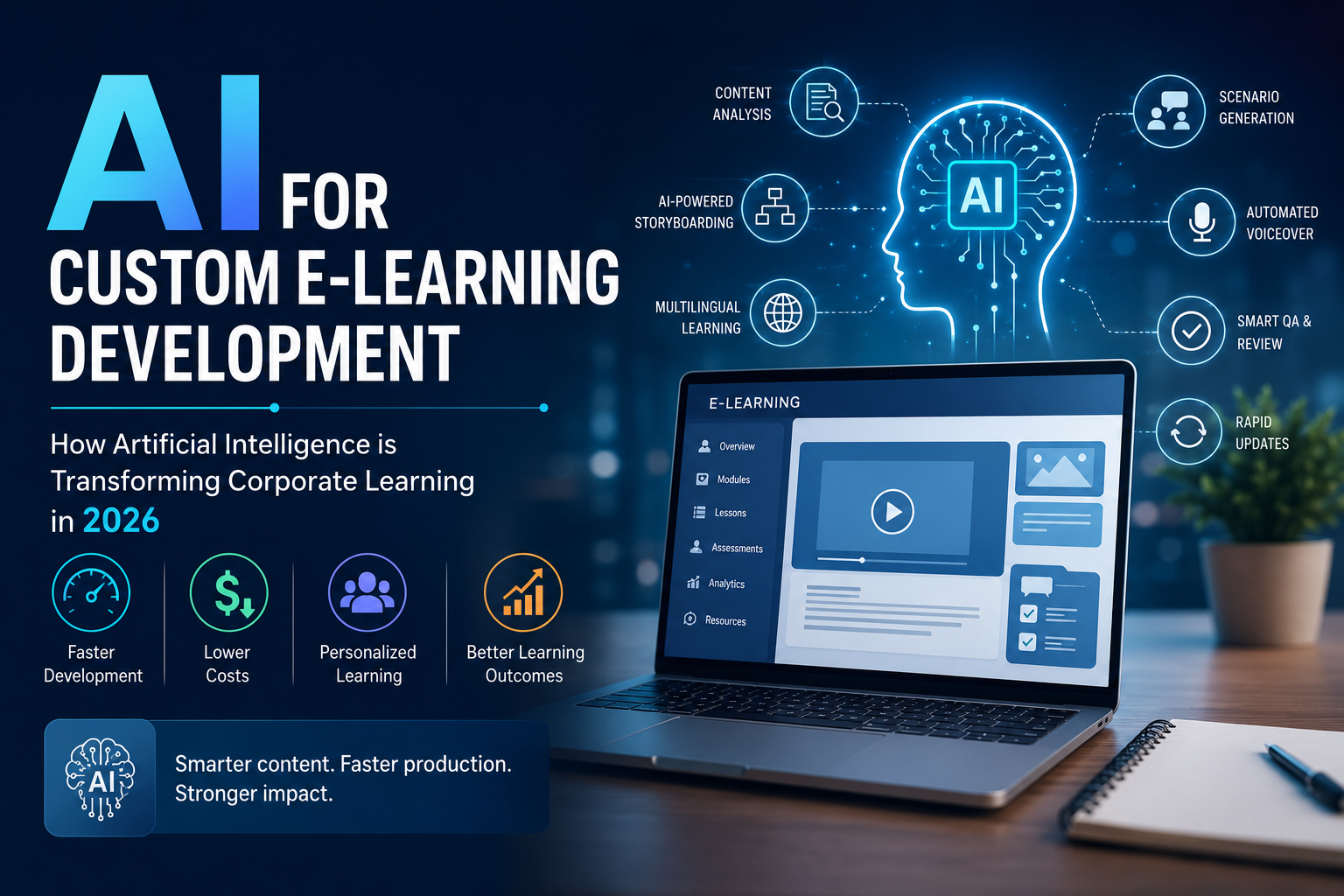
AI For Custom E-Learning Development in 2026: A Complete Guide
Artificial intelligence has changed the conversation around workplace learning. Just a few years ago, discussions about AI in Learning and Development focused mainly on chatbots, recommendation engines, and adaptive learning platforms. Today, the conversation has shifted dramatically. AI is no longer influencing only how employees learn. It is transforming how learning itself is conceived, designed, developed, reviewed, updated, and delivered. For organizations investing in custom e-learning, this represents one of the most significant changes the industry has experienced since the transition from classroom training to digital learning. Traditionally, developing a custom e-learning course required weeks or even months of coordinated
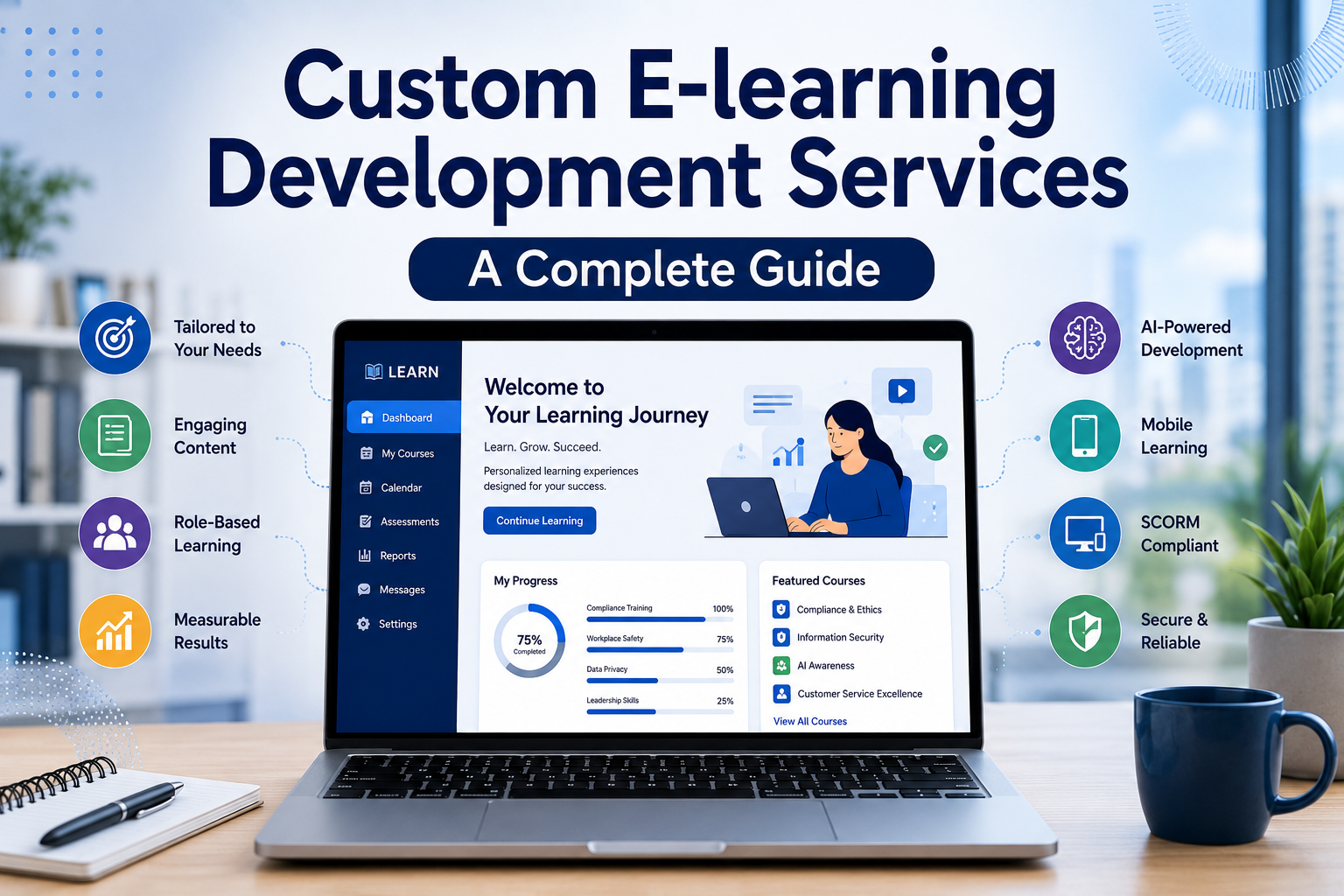
Custom E-Learning Development Services for Corporates in 2026-A Complete Guide
Introduction The way organizations train their employees has changed significantly over the last few years. Corporate learning is no longer viewed as a routine HR activity or a compliance requirement. Today, organizations expect learning to improve productivity, accelerate onboarding, strengthen compliance, support digital transformation, and prepare employees for constant business change. At the same time, the workplace has become more complex. Artificial intelligence is reshaping business processes, regulations continue to evolve, hybrid work has become the norm for many organizations, and employees are expected to learn new skills much faster than before. Generic training often struggles to keep pace
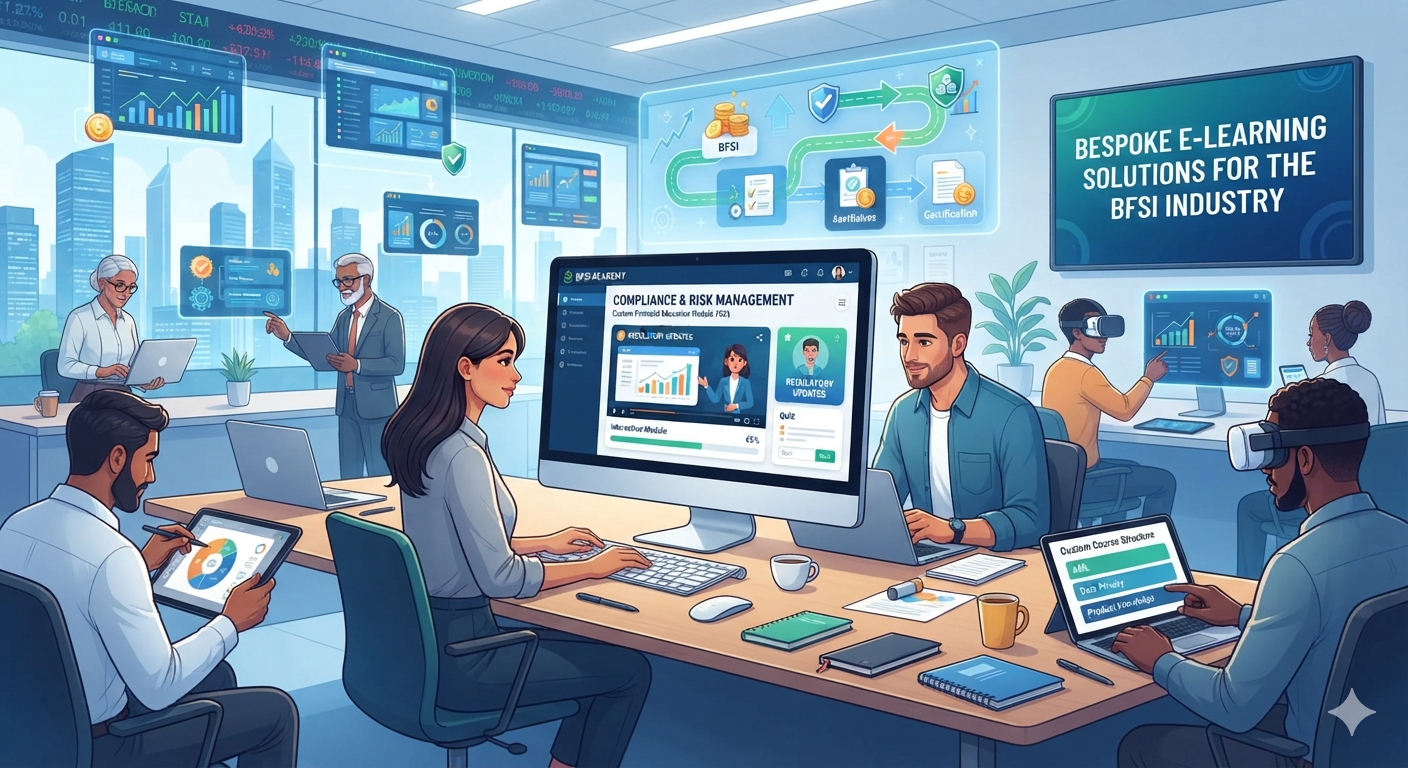
Custom E-Learning Development for BFSI: What Has Changed in 2026
The BFSI sector continues to be one of the most regulated sectors in the world. But in 2026, the pace of change has accelerated like never before. Banks, insurance companies, NBFCs, fintech firms, mutual fund houses, and payment companies are adapting to new technologies, stricter regulations, evolving customer expectations, and increasingly sophisticated financial crimes. These changes have also transformed the way organizations approach employee learning. A few years ago, many institutions could rely on standard e-learning courses to satisfy compliance requirements. Today, that approach is proving inadequate. Employees need training that reflects their actual roles, internal systems, products, customers, and
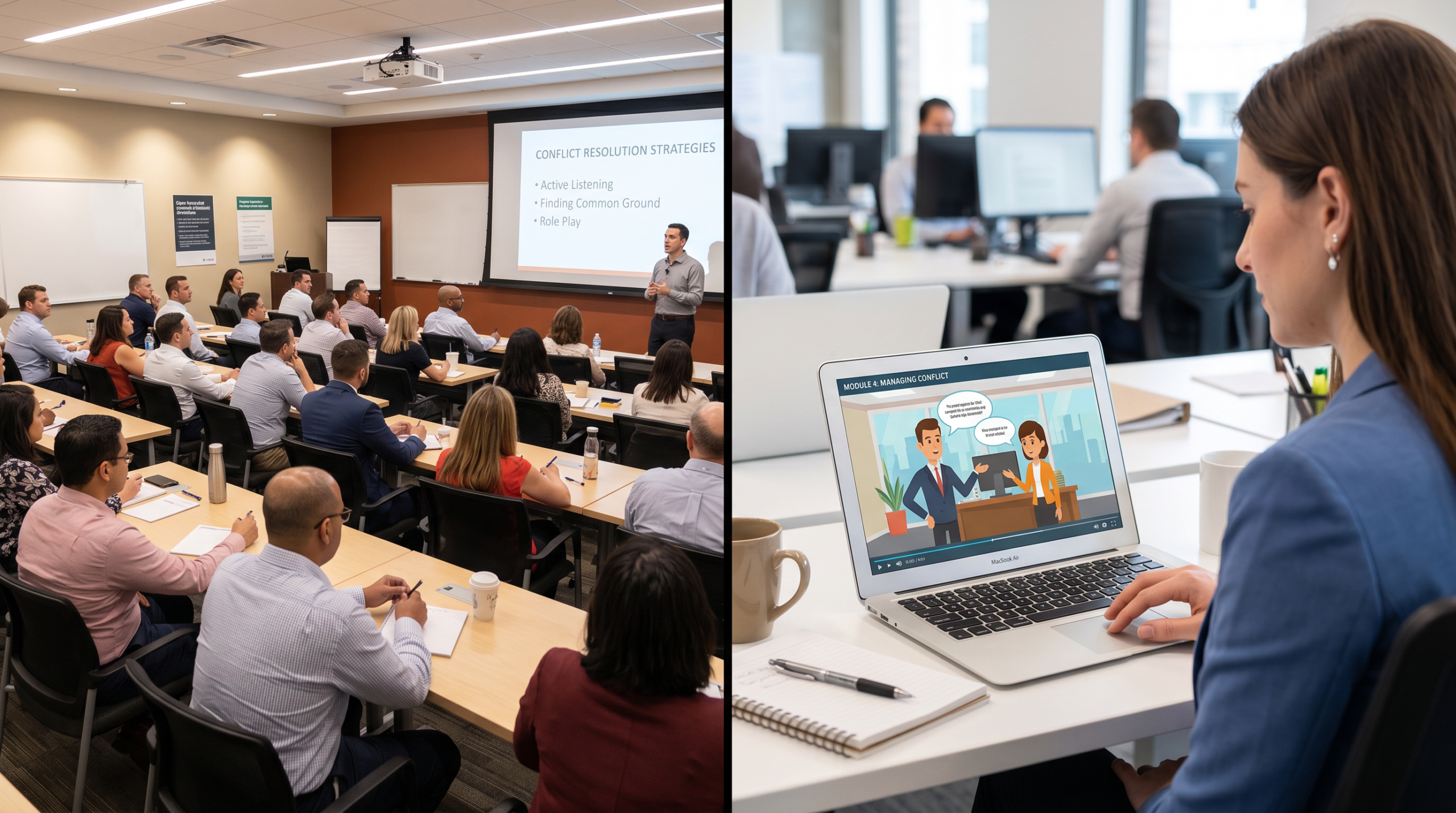
From Classroom Training to Digital Learning: A Step-by-Step Corporate Training Transformation Guide
For decades, classroom training has been the cornerstone of corporate learning. Organizations have relied on instructor-led sessions, workshops, seminars, and face-to-face training programs to onboard employees, build skills, and ensure compliance. While classroom training offers valuable opportunities for interaction and discussion, it also comes with limitations such as scheduling challenges, travel costs, inconsistent delivery, and scalability issues. Today's workplaces are changing rapidly. Hybrid work models, geographically dispersed teams, evolving technologies, and increasing demands for continuous learning have accelerated the shift toward digital learning. As a result, organizations across industries are transforming traditional classroom training into scalable, engaging, and measurable digital
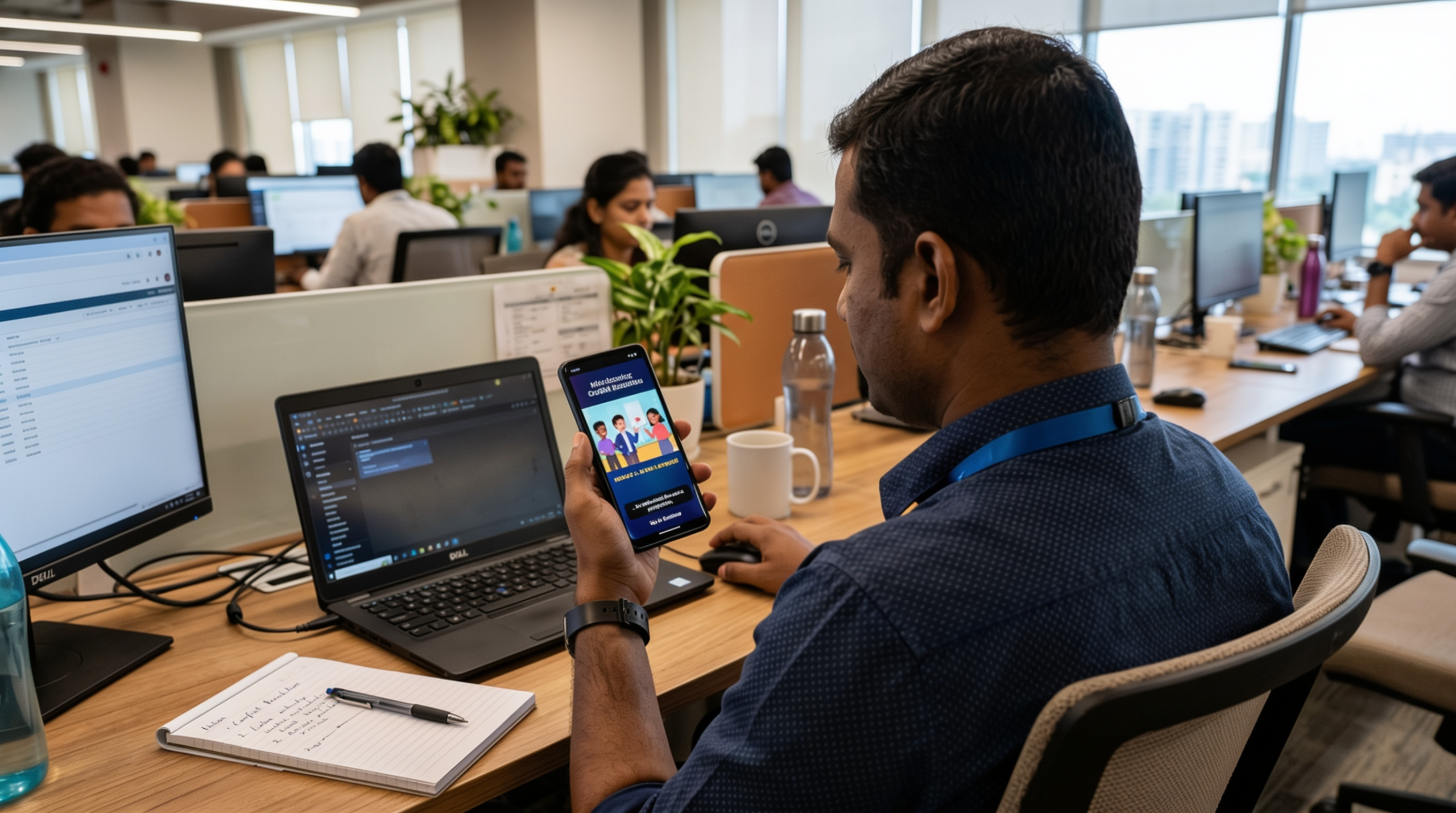
Microlearning vs Traditional E-Learning: Which Training Approach Works Best for Modern Employees?
Organizations today face a common challenge: how to deliver effective training to employees who are busier, more distracted, and expected to learn faster than ever before. As workplace demands continue to increase, Learning and Development (L&D) teams are under pressure to provide training that is engaging, accessible, and capable of producing measurable results. Two of the most widely used digital learning approaches are microlearning and traditional e-learning. While both aim to improve employee knowledge and performance, they differ significantly in structure, delivery, learner experience, and learning outcomes. The question many L&D managers ask is: Which approach works best for modern

SCORM-Compliant E-Learning: What Every L&D Manager Should Know
In today's digital learning environment, organizations invest significant resources in creating and delivering employee training programs. Whether it's onboarding, compliance training, cybersecurity awareness, leadership development, or product knowledge training, Learning and Development (L&D) managers need a reliable way to deploy, track, and manage learning content across their workforce. This is where SCORM-compliant e-learning plays a crucial role. If you've ever worked with Learning Management Systems (LMSs), you've likely encountered the term SCORM. While it may sound technical, understanding SCORM is essential for any L&D manager responsible for implementing and managing corporate training programs. SCORM compliance ensures that e-learning courses work

How Scenario-Based E-Learning Improves Knowledge Retention and Workplace Decision-Making
In today's fast-paced business environment, organizations invest significant resources in employee training. Yet, many companies face a common challenge: employees forget much of what they learn shortly after completing training programs. Traditional e-learning courses often rely heavily on presentations, lengthy content screens, and passive information delivery. While these methods may transfer information, they do not always ensure that learners can apply their knowledge effectively in real workplace situations. This is where scenario-based e-learning makes a difference. Scenario-based e-learning places learners in realistic workplace situations where they must make decisions, solve problems, and experience the consequences of their actions in a