

How To Develop Effective Animated E-Learning Videos
Animated e-learning videos have become a powerful tool for corporate training. They help organizations simplify complex topics, improve learner engagement, and deliver consistent training experiences across diverse workforces. Whether used for employee onboarding, compliance training, cybersecurity awareness, product training, or leadership development, animated videos can transform traditional learning into an engaging and memorable experience. However, creating an effective animated e-learning video involves much more than designing attractive visuals and adding voiceovers. Behind every successful training video is a structured development process that combines instructional design, storytelling, visual communication, and technical expertise. Understanding this process helps Learning and Development (L&D) managers

From Classroom Training to Digital Learning: A Step-by-Step Corporate Training Transformation Guide
For decades, classroom training has been the cornerstone of corporate learning. Organizations have relied on instructor-led sessions, workshops, seminars, and face-to-face training programs to onboard employees, build skills, and ensure compliance. While classroom training offers valuable opportunities for interaction and discussion, it also comes with limitations such as scheduling challenges, travel costs, inconsistent delivery, and scalability issues. Today's workplaces are changing rapidly. Hybrid work models, geographically dispersed teams, evolving technologies, and increasing demands for continuous learning have accelerated the shift toward digital learning. As a result, organizations across industries are transforming traditional classroom training into scalable, engaging, and measurable digital

15 Gamification Ideas to Make Employee Onboarding More Engaging
Introduction Employee onboarding plays a critical role in shaping a new hire's perception of an organization. It is the first opportunity to introduce company culture, processes, expectations, and values. However, traditional onboarding often involves lengthy presentations, policy documents, and information overload that can leave new employees disengaged and overwhelmed. This is where gamification can make a significant difference. Gamification involves applying game elements such as points, badges, challenges, rewards, leaderboards, and storytelling to non-game activities. When incorporated into onboarding programs, gamification transforms passive learning into an interactive and enjoyable experience. Research consistently shows that engaged employees are more productive, learn

Traditional vs. Gamified Employee Onboarding: Which Is More Effective?
Employee onboarding is one of the most critical stages in the employee lifecycle. A well-designed onboarding program helps new hires understand their roles, connect with the company culture, and become productive faster. Yet many organizations still rely on traditional onboarding methods that often struggle to engage today's workforce. In recent years, gamified employee onboarding has emerged as a modern alternative, transforming routine orientation activities into interactive and rewarding learning experiences. But does gamification truly outperform traditional onboarding? This article compares traditional and gamified employee onboarding across key parameters to help organizations determine which approach is more effective. What Is Traditional
Pros and Cons of Gamified Employee Onboarding
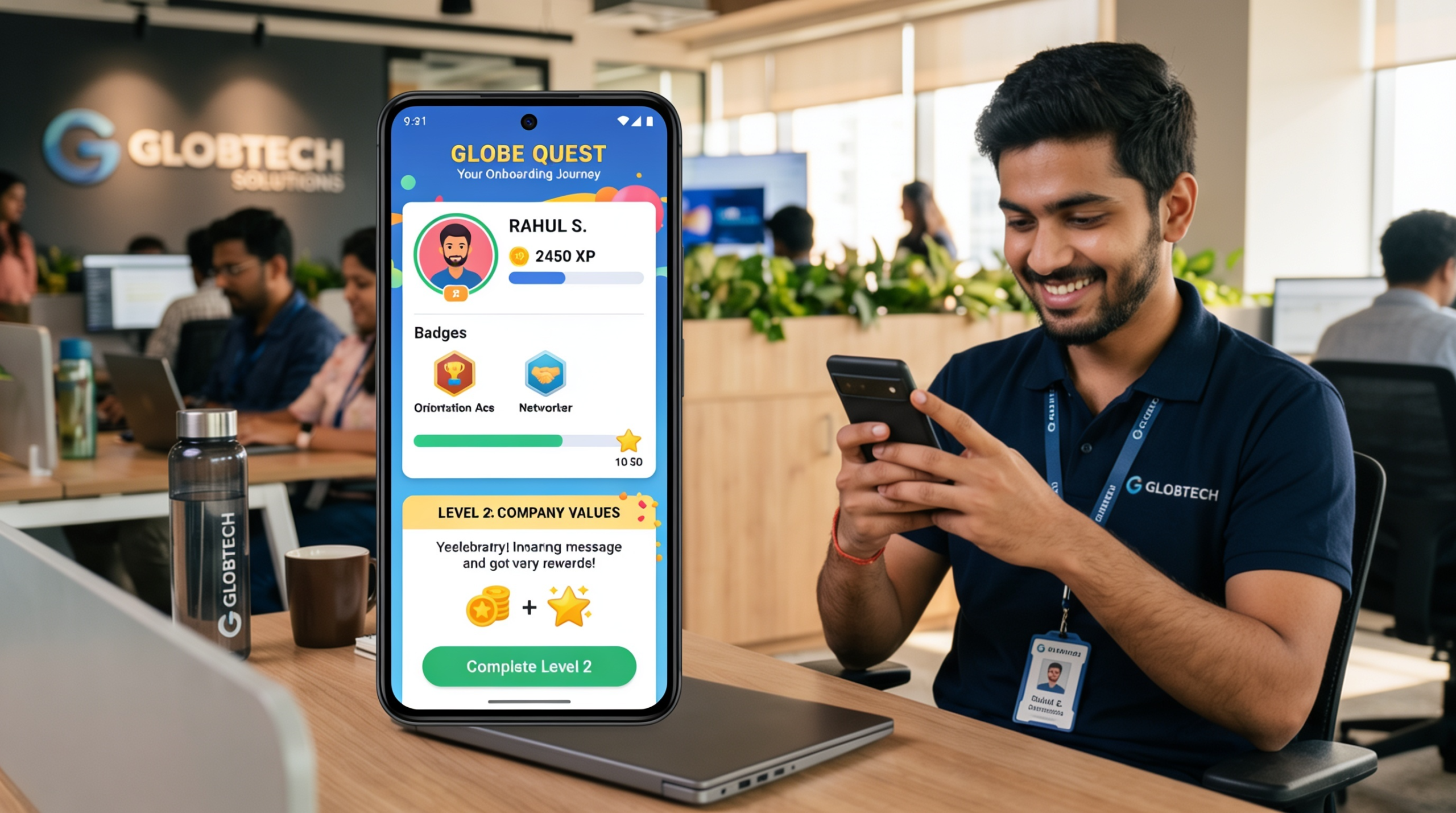
Introduction First impressions matter. For new employees, the onboarding experience often shapes their perception of the organization, influences their engagement levels, and impacts how quickly they become productive contributors. Yet traditional onboarding programs are frequently viewed as lengthy, information-heavy, and uninspiring. New hires are expected to absorb company policies, organizational structures, compliance requirements, job responsibilities, and workplace culture within a short period. The result is often information overload and poor retention. To address this challenge, many organizations are turning to gamified employee onboarding. By incorporating game elements such as points, badges, levels, challenges, leaderboards, rewards, and interactive scenarios, companies