

Microlearning Through Animated Videos: A Powerful Training Strategy
In today's fast-paced work environment, employees are expected to learn continuously while managing increasing workloads, tight deadlines, and constant information flow. Traditional training programs often struggle to keep pace with these realities. Long training sessions and lengthy e-learning courses can feel overwhelming, resulting in reduced engagement, lower completion rates, and poor knowledge retention. As organizations seek more effective ways to train their workforce, microlearning through animated videos has emerged as one of the most powerful and popular learning strategies. By delivering focused learning content in short, engaging video formats, organizations can improve employee participation, enhance knowledge retention, and support learning

The Role of Animated Videos in Compliance Training
Compliance training is a critical component of every organization's learning and development strategy. From workplace harassment prevention and data privacy to anti-bribery regulations and cybersecurity awareness, businesses invest significant resources in ensuring employees understand their responsibilities and comply with legal, regulatory, and organizational requirements. However, compliance training often faces a major challenge: employee engagement. Many employees view compliance courses as mandatory exercises rather than valuable learning opportunities. Traditional training methods, such as lengthy presentations, policy documents, and text-heavy e-learning modules, can feel repetitive and uninspiring. As a result, employees may complete the training without fully understanding or retaining the information.

Best Practices for Creating Engaging Animated E-Learning Videos
Animated e-learning videos have become one of the most effective tools for corporate training. They transform complex information into engaging visual experiences, improve learner attention, and make training more accessible across diverse audiences. From employee onboarding and compliance training to product education and soft skills development, animated videos are helping organizations deliver learning in a more impactful way. However, simply adding animation to a training program does not guarantee success. Many organizations invest in animated e-learning videos only to discover that employees still lose interest, skip content, or fail to retain critical information. The difference between an average training video
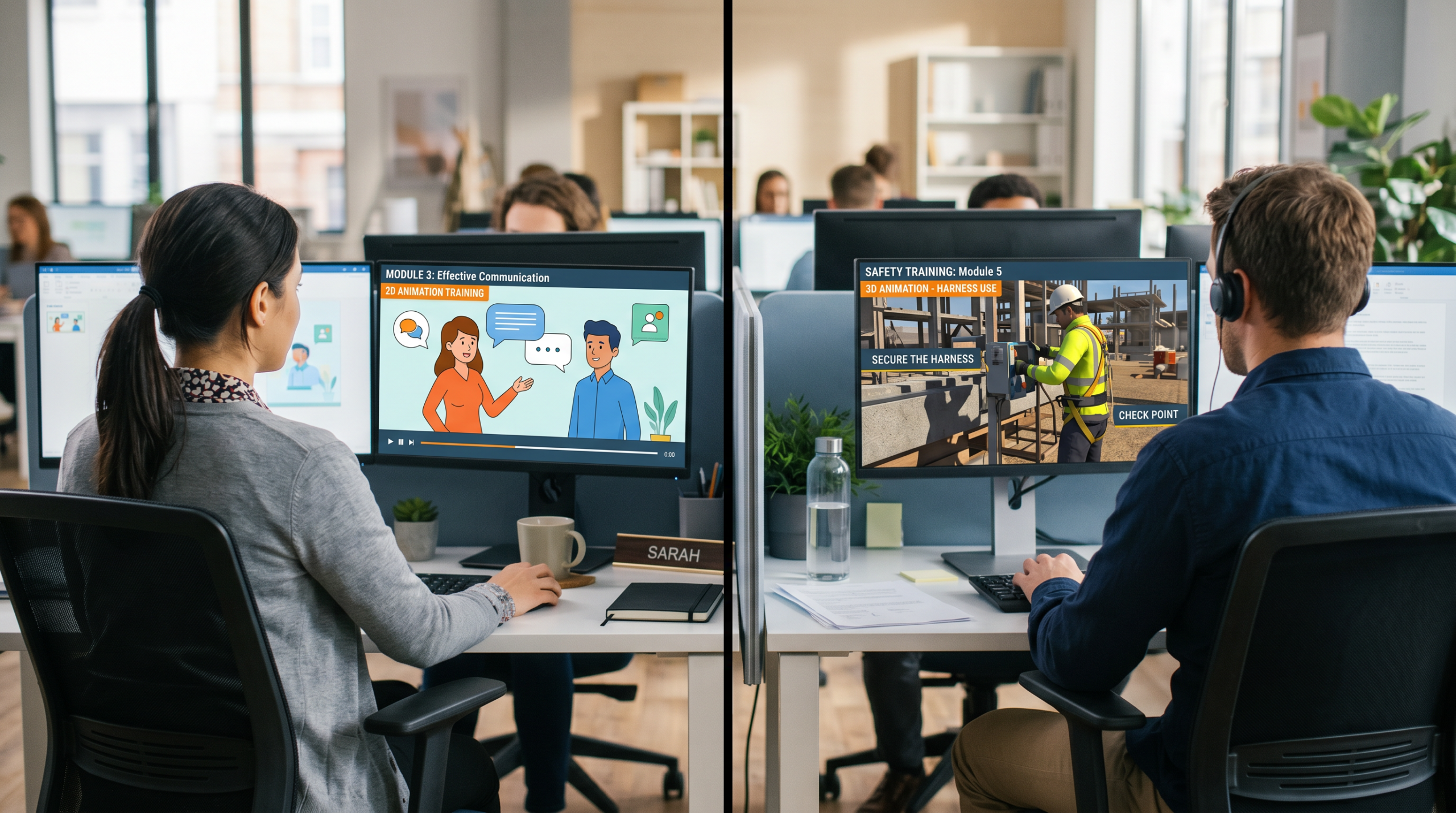
2D vs 3D Animated Training Videos: Which Is Right for Your Organization?
Organizations today have more options than ever when it comes to creating engaging digital learning experiences. Among the most popular formats are 2D animated training videos and 3D animated training videos. Both can effectively communicate information, improve learner engagement, and support employee training initiatives. However, choosing the right approach depends on your learning objectives, target audience, budget, and the complexity of the subject matter. Many Learning and Development (L&D) managers face a common question when planning a training project: Should we use 2D animation or invest in 3D animation? The answer is not always straightforward. Both formats have distinct advantages

Common Mistakes to Avoid When Developing Animated Training Videos
Animated training videos have become one of the most effective tools for corporate learning. They simplify complex concepts, improve learner engagement, and provide a consistent learning experience across organizations. Whether used for employee onboarding, compliance training, product education, cybersecurity awareness, or soft skills development, animated videos can significantly enhance training outcomes when designed correctly. However, not all animated training videos achieve their intended goals. Many organizations invest substantial time and resources into video-based learning only to discover that employees lose interest, fail to retain information, or struggle to apply what they have learned in the workplace. In most cases, the

Microlearning vs Traditional E-Learning: Which Training Approach Works Best for Modern Employees?
Organizations today face a common challenge: how to deliver effective training to employees who are busier, more distracted, and expected to learn faster than ever before. As workplace demands continue to increase, Learning and Development (L&D) teams are under pressure to provide training that is engaging, accessible, and capable of producing measurable results. Two of the most widely used digital learning approaches are microlearning and traditional e-learning. While both aim to improve employee knowledge and performance, they differ significantly in structure, delivery, learner experience, and learning outcomes. The question many L&D managers ask is: Which approach works best for modern

How Scenario-Based E-Learning Improves Knowledge Retention and Workplace Decision-Making
In today's fast-paced business environment, organizations invest significant resources in employee training. Yet, many companies face a common challenge: employees forget much of what they learn shortly after completing training programs. Traditional e-learning courses often rely heavily on presentations, lengthy content screens, and passive information delivery. While these methods may transfer information, they do not always ensure that learners can apply their knowledge effectively in real workplace situations. This is where scenario-based e-learning makes a difference. Scenario-based e-learning places learners in realistic workplace situations where they must make decisions, solve problems, and experience the consequences of their actions in a

Traditional vs. Gamified Employee Onboarding: Which Is More Effective?
Employee onboarding is one of the most critical stages in the employee lifecycle. A well-designed onboarding program helps new hires understand their roles, connect with the company culture, and become productive faster. Yet many organizations still rely on traditional onboarding methods that often struggle to engage today's workforce. In recent years, gamified employee onboarding has emerged as a modern alternative, transforming routine orientation activities into interactive and rewarding learning experiences. But does gamification truly outperform traditional onboarding? This article compares traditional and gamified employee onboarding across key parameters to help organizations determine which approach is more effective. What Is Traditional