Introduction
First impressions matter. For new employees, the onboarding experience often shapes their perception of the organization, influences their engagement levels, and impacts how quickly they become productive contributors.
Yet traditional onboarding programs are frequently viewed as lengthy, information-heavy, and uninspiring. New hires are expected to absorb company policies, organizational structures, compliance requirements, job responsibilities, and workplace culture within a short period. The result is often information overload and poor retention.
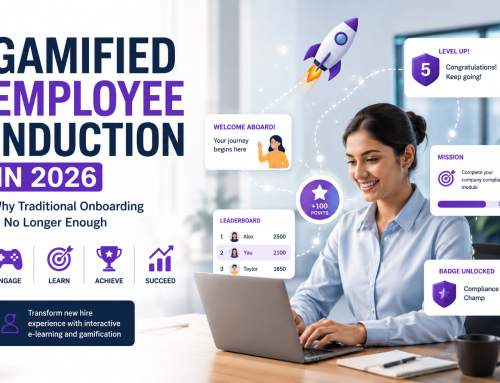
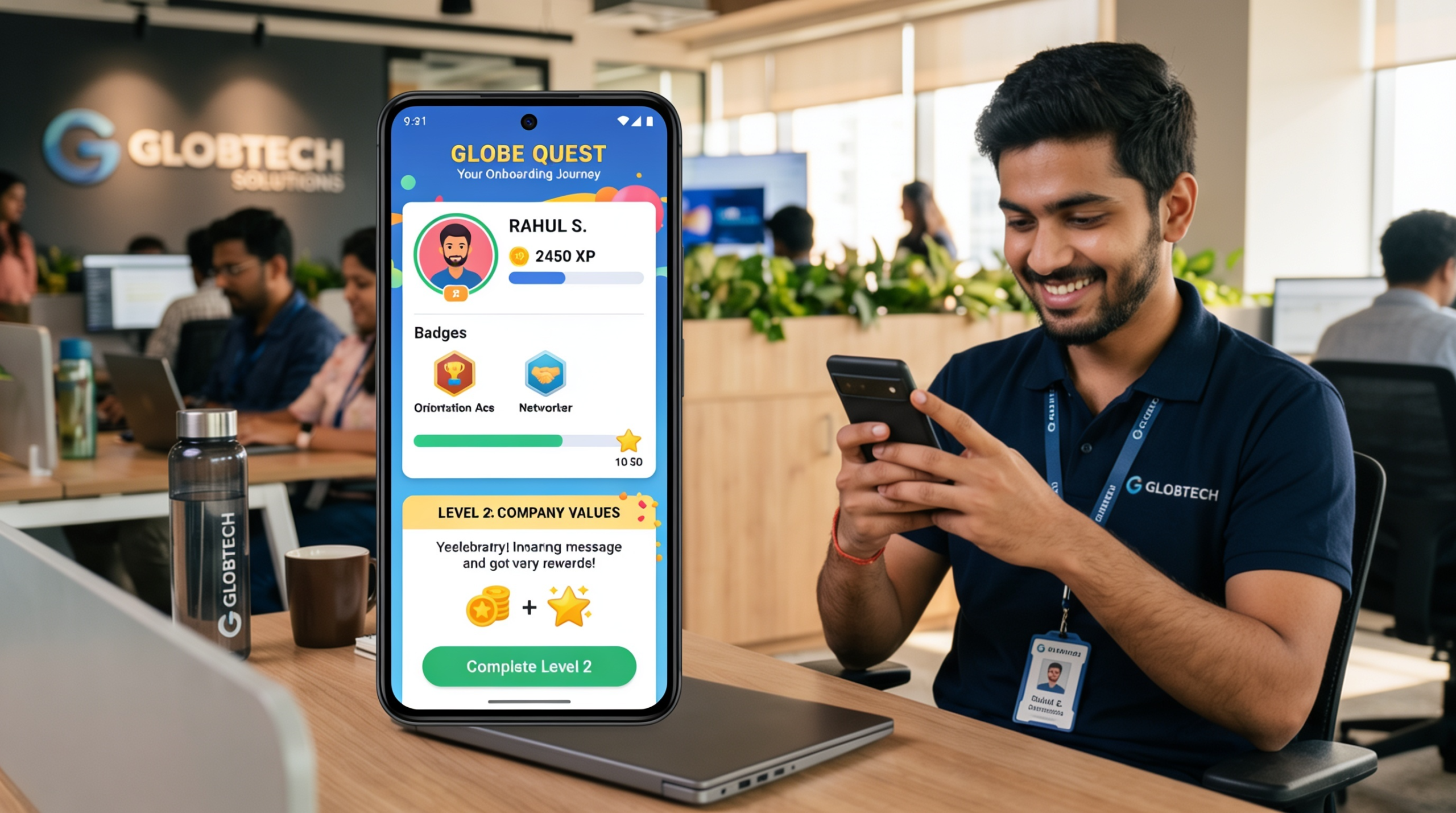
To address this challenge, many organizations are turning to gamified employee onboarding. By incorporating game elements such as points, badges, levels, challenges, leaderboards, rewards, and interactive scenarios, companies can transform onboarding from a passive process into an engaging learning experience.
However, like any learning strategy, gamification is not a universal solution. While it offers several benefits, it also comes with certain limitations that organizations should understand before implementation.
This article explores the major pros and cons of gamified employee onboarding and helps organizations determine whether it is the right approach for their workforce.
What is Gamified Employee Onboarding?
Gamified onboarding involves applying game-design principles to the employee onboarding process. Instead of simply presenting information through presentations, manuals, or videos, employees participate in interactive activities that encourage exploration, decision-making, competition, and achievement.
Examples include:
- Completing onboarding missions
- Earning points for finishing training modules
- Unlocking new content after completing challenges
- Competing on leaderboards
- Participating in scenario-based simulations
- Collecting badges and certificates
- Progressing through levels and milestones
The objective is not to turn onboarding into a game, but rather to use proven engagement techniques that motivate learners and improve knowledge retention.
Advantages of Gamified Employee Onboarding
1. Higher Employee Engagement
One of the biggest challenges in onboarding is maintaining employee attention.
Traditional onboarding often involves lengthy presentations, policy documents, and repetitive training sessions. New employees may struggle to stay focused, especially when exposed to large amounts of information within a short timeframe.
Gamification introduces elements of challenge, achievement, and progression that naturally capture attention. Employees become active participants rather than passive recipients of information.
When onboarding feels interactive and rewarding, employees are more likely to remain engaged throughout the learning journey.
2. Improved Knowledge Retention
Research consistently shows that people remember information better when they actively participate in the learning process.
Gamified onboarding often incorporates:
- Quizzes
- Decision-making scenarios
- Simulations
- Problem-solving activities
- Knowledge challenges
These activities encourage learners to apply concepts rather than merely read or hear them.
As a result, employees are more likely to remember important information about company policies, procedures, products, compliance requirements, and workplace expectations.
3. Faster Time-to-Productivity
Organizations invest significant resources in helping new hires become productive as quickly as possible.
Gamified onboarding can accelerate learning by breaking content into manageable, structured learning paths. Employees progress through levels and modules at their own pace while receiving immediate feedback on their performance.
This approach allows learners to identify gaps in understanding early and correct mistakes before they affect workplace performance.
When employees learn faster, they contribute faster.
4. Enhanced Motivation
People naturally enjoy achieving goals and receiving recognition.
Game mechanics such as:
- Points
- Badges
- Progress bars
- Achievement certificates
- Rewards
provide a sense of accomplishment that motivates employees to continue learning.
Even simple visual indicators of progress can encourage employees to complete training modules and remain committed to the onboarding journey.
5. Consistent Learning Experience
In organizations with multiple locations or large workforces, ensuring consistent onboarding can be difficult.
Different trainers may emphasize different topics, leading to inconsistent employee experiences.
Gamified digital onboarding programs provide standardized content that is delivered uniformly across all locations and departments.
Every employee receives the same information, follows the same learning path, and is assessed using the same criteria.
This consistency is particularly valuable for compliance training and regulatory requirements.
6. Better Measurement and Analytics
Modern gamified onboarding platforms generate detailed learning analytics.
Organizations can track:
- Completion rates
- Assessment scores
- Learning progress
- Time spent on modules
- Knowledge gaps
- Engagement levels
These insights help HR and L&D teams identify areas where employees struggle and continuously improve onboarding programs.
Data-driven onboarding is often far more effective than relying on subjective feedback alone.
7. Supports Remote and Hybrid Workforces
As remote and hybrid work models become increasingly common, organizations need onboarding solutions that can engage employees regardless of location.
Gamified onboarding can be accessed anytime and from anywhere.
New hires can complete modules, participate in challenges, and interact with learning content without needing to attend lengthy classroom sessions.
This flexibility makes gamification particularly valuable for geographically distributed teams.
8. Encourages Cultural Integration
Successful onboarding is not just about learning processes and policies—it is also about understanding company culture.
Gamified experiences can introduce employees to organizational values, expected behaviors, customer service standards, and workplace ethics through realistic scenarios and storytelling.
Instead of simply reading about company culture, employees experience it through interactive decision-making activities.
This often creates stronger emotional connections with the organization.
Disadvantages of Gamified Employee Onboarding
While gamification offers significant advantages, it is important to understand its potential drawbacks.
1. Higher Development Costs
Well-designed gamified onboarding programs require investment.
Organizations may need to spend on:
- Instructional design
- Graphic design
- Animation
- E-learning development
- Learning management systems
- Gamification platforms
Compared to traditional onboarding presentations or documents, gamified solutions typically involve higher initial development costs.
Although the investment often pays off over time, budget constraints can be a challenge for some organizations.
2. Poor Design Can Reduce Learning Effectiveness
Not all gamification is effective.
A common mistake is focusing too heavily on game elements while neglecting learning objectives.
For example, excessive emphasis on points, badges, or rewards may distract employees from the actual content.
Gamification should always support learning outcomes rather than overshadow them.
A poorly designed program can become entertaining without being educational.
3. Not Everyone Responds Positively to Competition
Leaderboards and competitive elements can motivate some employees but discourage others.
While high performers may enjoy competing for top rankings, some individuals may feel uncomfortable being compared publicly with colleagues.
Organizations should carefully consider workforce demographics and learning preferences before implementing competitive mechanics.
In many cases, personal achievement systems work better than public competition.
4. Risk of Focusing on Rewards Instead of Learning
Gamification can sometimes create extrinsic motivation rather than intrinsic motivation.
Employees may focus on earning points, badges, or rewards instead of genuinely understanding the content.
When rewards become the primary objective, learning quality can suffer.
The best gamified programs balance rewards with meaningful learning experiences that encourage genuine understanding and application.
5. Development Requires Specialized Expertise
Creating an effective gamified onboarding experience requires expertise in multiple disciplines, including:
- Instructional design
- Learning psychology
- User experience design
- Game mechanics
- E-learning development
Simply adding points and badges to a course does not guarantee engagement.
Organizations without internal expertise may need external development partners, which can increase costs and project timelines.
6. Content Updates Can Be More Complex
Businesses evolve continuously.
Policies change, procedures are updated, products evolve, and regulations are revised.
Updating a traditional document or presentation is relatively simple.
Updating a highly interactive gamified module may require changes to scenarios, assessments, animations, logic, and user interfaces.
Organizations should consider ongoing maintenance requirements when planning gamified onboarding initiatives.
7. Technology Dependence
Gamified onboarding relies heavily on technology platforms.
Employees may encounter issues such as:
- Device compatibility problems
- Internet connectivity limitations
- LMS integration challenges
- Technical support requirements
Technical barriers can negatively affect the onboarding experience if not addressed proactively.
A robust technology infrastructure is essential for successful implementation.
8. May Not Suit Every Type of Content
Certain onboarding topics lend themselves naturally to gamification.
Examples include:
- Company orientation
- Product knowledge
- Customer service
- Compliance scenarios
- Workplace behavior
However, some highly technical or complex subjects may require alternative learning approaches.
Organizations should avoid forcing gamification into areas where traditional learning methods may be more effective.
Best Practices for Successful Gamified Onboarding
Organizations can maximize benefits and minimize drawbacks by following these best practices:
Focus on Learning Objectives First
Gamification should support learning goals, not replace them. Every game element should serve a clear educational purpose.
Use Realistic Scenarios
Scenario-based learning helps employees apply knowledge in situations they are likely to encounter in the workplace.
Balance Fun and Functionality
The experience should be engaging without becoming distracting. Learning outcomes should always remain the primary focus.
Offer Meaningful Feedback
Immediate feedback helps employees understand mistakes and reinforces correct behaviors.
Keep Progress Visible
Progress bars, milestones, and achievement tracking help employees stay motivated throughout the onboarding journey.
Continuously Measure and Improve
Use analytics and learner feedback to identify opportunities for improvement and optimize the onboarding experience over time.
Conclusion
Gamified employee onboarding has emerged as a powerful tool for improving engagement, knowledge retention, motivation, and time-to-productivity. By transforming onboarding into an interactive experience, organizations can help new employees learn faster and connect more effectively with company culture.
However, gamification is not a magic solution. Poor design, excessive focus on rewards, high development costs, and technology challenges can limit its effectiveness if not managed carefully.
The most successful organizations view gamification as a strategic learning approach rather than simply a collection of game elements. When thoughtfully designed and aligned with business objectives, gamified onboarding can significantly enhance the employee experience and create a stronger foundation for long-term success.
For organizations looking to modernize onboarding, the question is no longer whether onboarding should be engaging—it is how effectively engagement can be used to drive learning, performance, and employee retention.