Introduction
Employee onboarding plays a critical role in shaping a new hire’s perception of an organization. It is the first opportunity to introduce company culture, processes, expectations, and values. However, traditional onboarding often involves lengthy presentations, policy documents, and information overload that can leave new employees disengaged and overwhelmed.
This is where gamification can make a significant difference.
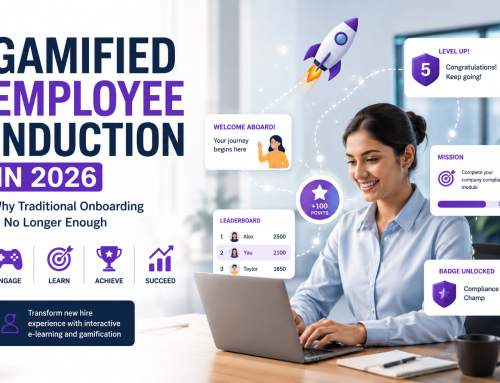
Gamification involves applying game elements such as points, badges, challenges, rewards, leaderboards, and storytelling to non-game activities. When incorporated into onboarding programs, gamification transforms passive learning into an interactive and enjoyable experience.
Research consistently shows that engaged employees are more productive, learn faster, and remain with organizations longer. By adding gamified elements to onboarding, organizations can improve knowledge retention, accelerate learning, and create a memorable first impression.
Here are 15 effective gamification ideas that can make employee onboarding more engaging and impactful.
1. Create an Onboarding Adventure
Transform onboarding into a journey where employees progress through different stages or levels. Each level can represent a key aspect of the organization such as company culture, products, policies, or job-specific training.
As employees complete each stage, they unlock the next challenge, creating a sense of progression and achievement.
2. Introduce Points and Rewards
Award points for completing onboarding activities such as watching training videos, passing quizzes, attending meetings, or submitting required documents.
Points can be exchanged for rewards like company merchandise, gift cards, lunch vouchers, or recognition certificates. Even small rewards can significantly increase participation.
3. Use Digital Badges
People enjoy collecting achievements. Digital badges provide visual recognition for completing specific milestones.
Examples include:
- Company Culture Champion
- Compliance Expert
- Cybersecurity Defender
- Product Knowledge Pro
Badges create a sense of accomplishment and encourage employees to complete all onboarding activities.
4. Launch an Onboarding Leaderboard
Leaderboards introduce healthy competition among new hires.
Employees earn points through various onboarding tasks, and their rankings are displayed on a leaderboard. This can motivate participants to complete activities promptly and strive for better performance.
To ensure inclusivity, focus on participation and learning rather than pure competition.
5. Organize a Virtual Scavenger Hunt
A scavenger hunt encourages employees to explore company resources.
Participants may be asked to locate:
- Important policies
- Organizational charts
- HR portals
- Product information
- Learning resources
This activity helps employees become familiar with tools and systems while having fun.
6. Create Interactive Quests
Instead of presenting information in a linear format, organize learning into quests.
For example:
- Complete your profile
- Meet your manager
- Learn company values
- Complete compliance training
- Connect with team members
Each completed quest unlocks the next challenge, creating momentum throughout the onboarding journey.
7. Use Story-Based Learning
Humans naturally connect with stories.
Create an onboarding storyline where the employee plays the role of a new team member helping the organization achieve a mission. As they progress, they encounter realistic workplace situations and make decisions that influence outcomes.
Story-driven onboarding is highly effective for improving engagement and retention.
8. Include Scenario-Based Challenges
Present employees with realistic workplace situations and ask them to make decisions.
Examples:
- Handling a customer complaint
- Responding to a cybersecurity threat
- Managing workplace conflicts
- Addressing compliance issues
Employees receive immediate feedback on their decisions, helping them understand company expectations and best practices.
9. Introduce Team-Based Challenges
Onboarding does not have to be an individual activity.
Group new hires into teams and assign collaborative challenges such as:
- Solving business problems
- Completing knowledge quests
- Participating in innovation exercises
Team-based activities encourage communication, relationship building, and collaboration from day one.
10. Create Achievement Milestones
Break onboarding into manageable milestones and celebrate each achievement.
Examples include:
- First Day Completed
- First Week Success
- Training Champion
- First Project Contribution
Recognizing progress helps employees stay motivated and reduces the feeling of being overwhelmed.
11. Use Interactive Knowledge Battles
Replace traditional assessments with game-style quizzes.
Employees can participate in:
- Timed quizzes
- Knowledge battles
- Trivia competitions
- Spin-the-wheel challenges
These activities make learning more enjoyable while reinforcing key concepts.
12. Introduce Mystery Missions
Add an element of surprise by assigning secret missions throughout the onboarding process.
Examples:
- Introduce yourself to three colleagues
- Attend a voluntary learning session
- Share an improvement idea
- Discover a company success story
Completing mystery missions can unlock bonus points or rewards.
The unpredictability keeps employees engaged and curious.
13. Build a Recognition Wall
Public recognition is a powerful motivator.
Create a digital recognition wall where managers and colleagues can celebrate onboarding achievements.
Recognition can highlight:
- Fast learners
- Helpful team members
- Collaboration champions
- Top quiz performers
Employees feel valued when their efforts are acknowledged publicly.
14. Incorporate Escape Room Activities
Virtual or classroom-based escape rooms can transform learning into an immersive experience.
Employees solve puzzles related to:
- Company policies
- Product knowledge
- Safety procedures
- Compliance requirements
To progress through the activity, participants must apply what they have learned.
Escape rooms combine learning, problem-solving, and teamwork in a highly engaging format.
15. Develop a Gamified Learning Dashboard
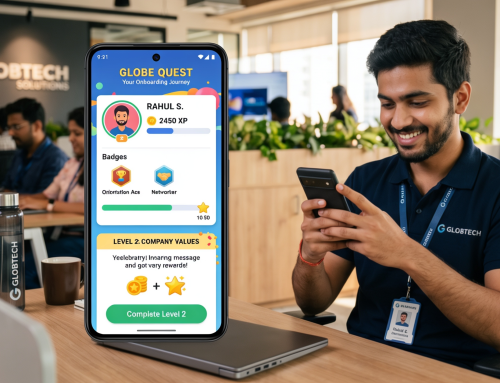
A personalized dashboard helps employees track their onboarding progress.
The dashboard can display:
- Completed modules
- Points earned
- Badges collected
- Pending tasks
- Achievement levels
Visual progress indicators encourage employees to continue learning and provide a clear roadmap for onboarding completion.
Best Practices for Gamified Employee Onboarding
While gamification can significantly improve onboarding effectiveness, successful implementation requires careful planning.
Align Gamification with Learning Objectives
Gamification should support business and learning goals rather than serving as entertainment alone.
Every challenge, badge, and reward should reinforce important knowledge or behaviors.
Keep the Experience Simple
Overly complex game mechanics can confuse participants.
Focus on intuitive navigation, clear instructions, and meaningful rewards.
Encourage Collaboration
Not every activity should be competitive.
Include cooperative challenges that promote teamwork and relationship building.
Provide Immediate Feedback
Employees learn more effectively when they receive instant feedback on their performance.
Use quizzes, simulations, and challenges that explain both correct and incorrect responses.
Recognize Progress Frequently
Small achievements matter.
Celebrating milestones throughout the onboarding process keeps motivation levels high and creates a positive learning experience.
Measure Results
Track metrics such as:
- Completion rates
- Assessment scores
- Employee satisfaction
- Time-to-productivity
- Retention rates
These insights help determine whether gamification is delivering the desired outcomes.
Benefits of Gamified Employee Onboarding
Organizations that successfully implement gamified onboarding often experience several advantages:
Higher Engagement
Interactive experiences are more engaging than traditional presentations and manuals.
Better Knowledge Retention
Employees are more likely to remember information when they actively participate in learning activities.
Faster Learning
Gamified learning encourages exploration and practice, helping employees become productive more quickly.
Improved Employee Experience
A positive onboarding experience contributes to higher job satisfaction and stronger organizational commitment.
Increased Retention
Employees who feel connected and engaged during onboarding are more likely to stay with the organization long term.
Conclusion
First impressions matter, and onboarding is often an employee’s first meaningful interaction with an organization. Traditional onboarding methods frequently struggle to maintain attention and enthusiasm, especially in today’s digital workplace.
Gamification offers a powerful solution by transforming onboarding into an engaging, interactive, and rewarding experience. Whether through quests, leaderboards, badges, simulations, escape rooms, or storytelling, gamified onboarding helps employees learn faster, retain more information, and develop stronger connections with the organization.
By implementing these 15 gamification ideas, organizations can create onboarding programs that not only educate new hires but also inspire, motivate, and prepare them for long-term success.
The future of onboarding is not just informative—it is interactive, immersive, and engaging.