Employee onboarding is one of the most critical phases in the employee lifecycle. A well-designed onboarding program helps new hires understand their roles, connect with the company culture, and become productive faster. To make onboarding more engaging and memorable, many organizations are turning to gamification.
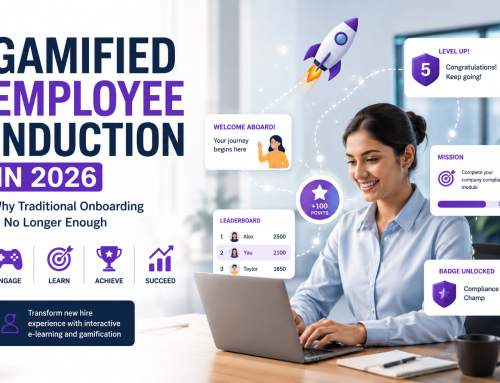
Gamified onboarding uses game elements such as points, badges, challenges, leaderboards, rewards, and storytelling to motivate learners and improve participation. When implemented correctly, it can transform a traditionally passive process into an interactive and enjoyable experience.
However, not all gamified onboarding programs succeed. Many organizations become so focused on adding game mechanics that they lose sight of the actual learning objectives. The result is an onboarding experience that is entertaining but ineffective.
This article explores the most common mistakes organizations make when designing a gamified onboarding program and how to avoid them.
1. Focusing on Fun Instead of Learning
One of the biggest mistakes is treating gamification as entertainment rather than a learning strategy.
Many onboarding programs include points, badges, and games simply because they seem exciting. While these elements can increase engagement, they should always support learning outcomes.
For example, a trivia game about company policies can reinforce knowledge effectively. However, a random game unrelated to the onboarding content may distract learners rather than educate them.
How to Avoid It
Start by defining clear learning objectives. Every game mechanic should help employees achieve a specific goal, such as understanding company values, learning compliance requirements, or mastering job-related processes.
2. Overcomplicating the Experience
Some organizations try to create highly complex onboarding games with multiple levels, missions, currencies, avatars, and reward systems.
While these features may seem impressive, they can overwhelm new employees who are already trying to learn about their role, team, and organization.
If employees spend more time figuring out the game than learning the content, the onboarding program has failed.
How to Avoid It
Keep the game mechanics simple and intuitive. Employees should immediately understand how the system works and what they need to do to progress.
Remember: simplicity improves adoption.
3. Using Gamification Without a Purpose
Gamification is not a magic solution that automatically improves onboarding.
A common mistake is adding points, badges, and leaderboards without understanding why they are needed. This often leads to superficial engagement where employees chase rewards but retain little knowledge.
How to Avoid It
Define the business objective first.
Ask questions such as:
- Do you want employees to complete onboarding faster?
- Do you want better knowledge retention?
- Do you want to improve participation rates?
- Do you want employees to understand company culture more effectively?
The gamification strategy should directly support these objectives.
4. Ignoring Different Learning Styles
Employees learn in different ways. Some prefer reading, while others learn better through videos, simulations, discussions, or hands-on activities.
A one-size-fits-all gamified onboarding experience may not engage everyone equally.
How to Avoid It
Include a variety of learning formats such as:
- Interactive scenarios
- Videos
- Quizzes
- Simulations
- Drag-and-drop activities
- Story-based challenges
- Knowledge checks
This creates a more inclusive learning experience.
5. Making Competition Excessive
Leaderboards can be effective motivators, but excessive competition can create unnecessary pressure.
Some employees enjoy competing with colleagues, while others may feel discouraged if they consistently rank near the bottom.
This is especially true during onboarding, when new hires are still building confidence.
How to Avoid It
Balance competition with collaboration.
Consider team-based challenges, cooperative missions, and shared goals that encourage employees to work together rather than compete constantly.
6. Offering Meaningless Rewards
Not all rewards motivate employees.
Organizations sometimes award badges and points that have little value or significance. Employees quickly lose interest when rewards feel disconnected from their achievements.
How to Avoid It
Design rewards that are meaningful and relevant.
Examples include:
- Certificates of completion
- Recognition from managers
- Access to advanced learning content
- Company merchandise
- Professional development opportunities
Recognition often has a stronger impact than material rewards.
7. Neglecting Storytelling
Storytelling is one of the most powerful aspects of gamification, yet many onboarding programs ignore it completely.
Without a narrative, onboarding can feel like a collection of disconnected tasks and quizzes.
How to Avoid It
Create a journey for employees.
For example, new hires could become “mission specialists” tasked with helping the organization achieve strategic goals. Each onboarding module becomes part of a larger story that unfolds over time.
A compelling narrative increases emotional engagement and knowledge retention.
8. Providing Immediate Rewards for Everything
While rewards can motivate learners, excessive rewards can reduce their impact.
If employees receive points or badges for every minor action, the rewards quickly lose meaning.
How to Avoid It
Reserve rewards for meaningful milestones and achievements.
Celebrate completion of major onboarding stages rather than every small activity.
This makes rewards feel more valuable and memorable.
9. Ignoring Feedback and Analytics
Many organizations launch a gamified onboarding program and never evaluate its effectiveness.
Without feedback and performance data, it is impossible to know whether the program is achieving its objectives.
How to Avoid It
Track metrics such as:
- Completion rates
- Assessment scores
- Time to productivity
- Learner engagement
- Employee feedback
- Knowledge retention
Use these insights to continuously improve the onboarding experience.
10. Failing to Align with Company Culture
A gamified onboarding program should reflect the organization’s culture and values.
A highly competitive onboarding game may not fit a company that emphasizes collaboration and teamwork. Similarly, an overly casual approach may not suit organizations operating in highly regulated industries.
How to Avoid It
Design gamification elements that reinforce the company’s identity.
The onboarding experience should feel like a natural extension of the workplace culture.
11. Making Content Too Long
Even the best gamification cannot save lengthy, information-heavy onboarding content.
Employees often experience information overload during their first few weeks.
How to Avoid It
Break content into smaller modules using microlearning principles.
Short challenges, quizzes, and scenario-based activities are easier to complete and remember than lengthy training sessions.
12. Forgetting Mobile Accessibility
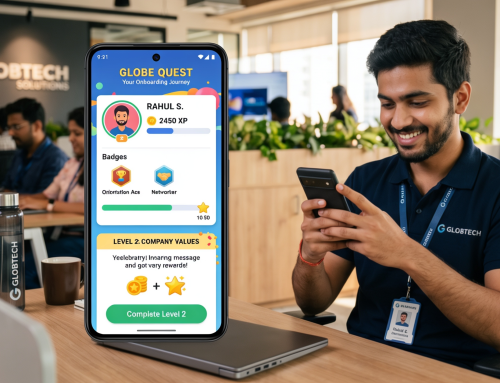
Today’s workforce expects learning experiences that can be accessed anytime and anywhere.
If a gamified onboarding program only works on desktop computers, participation and convenience may suffer.
How to Avoid It
Ensure the onboarding experience is mobile-friendly and accessible across devices.
Responsive design improves flexibility and encourages completion.
13. Not Updating the Program Regularly
Business processes, policies, technologies, and organizational priorities change over time.
An onboarding program that was effective two years ago may contain outdated information today.
How to Avoid It
Review onboarding content periodically and update:
- Company information
- Policies
- Procedures
- Product knowledge
- Compliance requirements
- Game mechanics
Continuous updates keep the experience relevant and engaging.
14. Measuring Engagement Instead of Outcomes
Many organizations celebrate high participation rates while ignoring whether employees actually learned anything.
A learner may complete every challenge and earn every badge without fully understanding the content.
How to Avoid It
Measure both engagement and learning outcomes.
Evaluate:
- Knowledge retention
- Assessment performance
- Job readiness
- Application of skills on the job
The ultimate goal is improved employee performance, not just higher participation.
Conclusion
Gamified onboarding can significantly improve employee engagement, knowledge retention, and overall onboarding effectiveness. However, simply adding game elements does not guarantee success.
Organizations often make mistakes such as prioritizing entertainment over learning, creating overly complex experiences, relying too heavily on competition, offering meaningless rewards, or failing to align gamification with business objectives.
The most successful gamified onboarding programs are designed with clear learning goals, simple mechanics, meaningful rewards, compelling storytelling, and continuous improvement. When gamification supports rather than distracts from learning, organizations can create onboarding experiences that are engaging, memorable, and highly effective.
By avoiding these common mistakes, companies can ensure that their gamified onboarding programs not only capture attention but also help new employees become confident, productive, and connected members of the organization.