
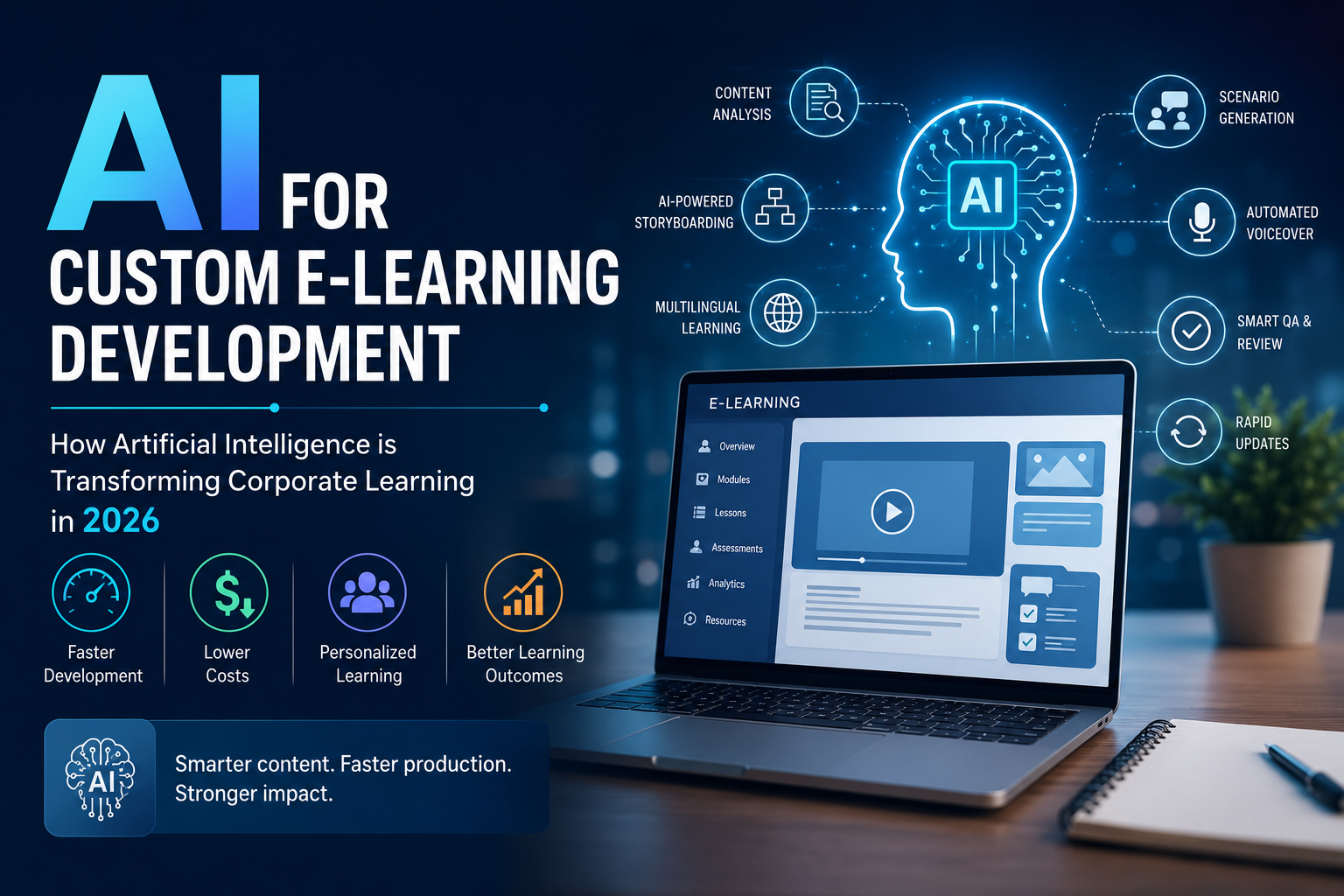
AI For Custom E-Learning Development in 2026: A Complete Guide
Artificial intelligence has changed the conversation around workplace learning. Just a few years ago, discussions about AI in Learning and Development focused mainly on chatbots, recommendation engines, and adaptive learning platforms. Today, the conversation has shifted dramatically. AI is no longer influencing only how employees learn. It is transforming how learning itself is conceived, designed, developed, reviewed, updated, and delivered. For organizations investing in custom e-learning, this represents one of the most significant changes the industry has experienced since the transition from classroom training to digital learning. Traditionally, developing a custom e-learning course required weeks or even months of coordinated
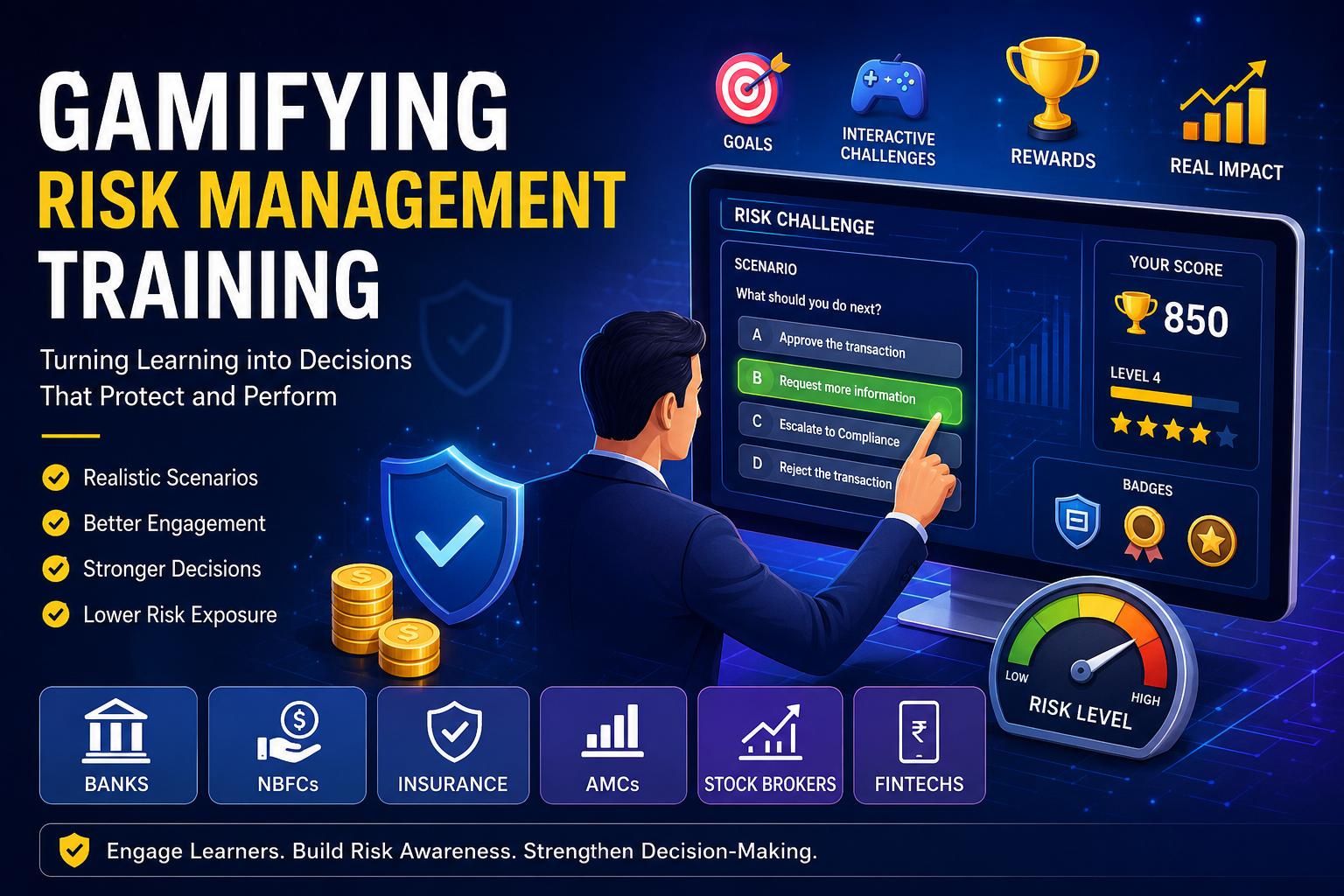
Gamifying Risk Management Training in BFSI: Building Better Risk Management
Introduction The risk landscape across the Banking, Financial Services, and Insurance (BFSI) sector has become significantly more complex over the past few years. Financial institutions are no longer dealing solely with traditional operational and regulatory risks. Today, they must navigate AI-enabled fraud, sophisticated cyberattacks, digital lending risks, real-time payment fraud, evolving Anti-Money Laundering (AML) techniques, third-party technology dependencies, data privacy regulations, and increasing customer expectations. To manage these challenges, organizations have invested heavily in technology. Artificial intelligence detects suspicious transactions, fraud monitoring systems identify anomalies, Governance, Risk, and Compliance (GRC) platforms automate controls, and Security Operations Centers (SOCs) continuously monitor
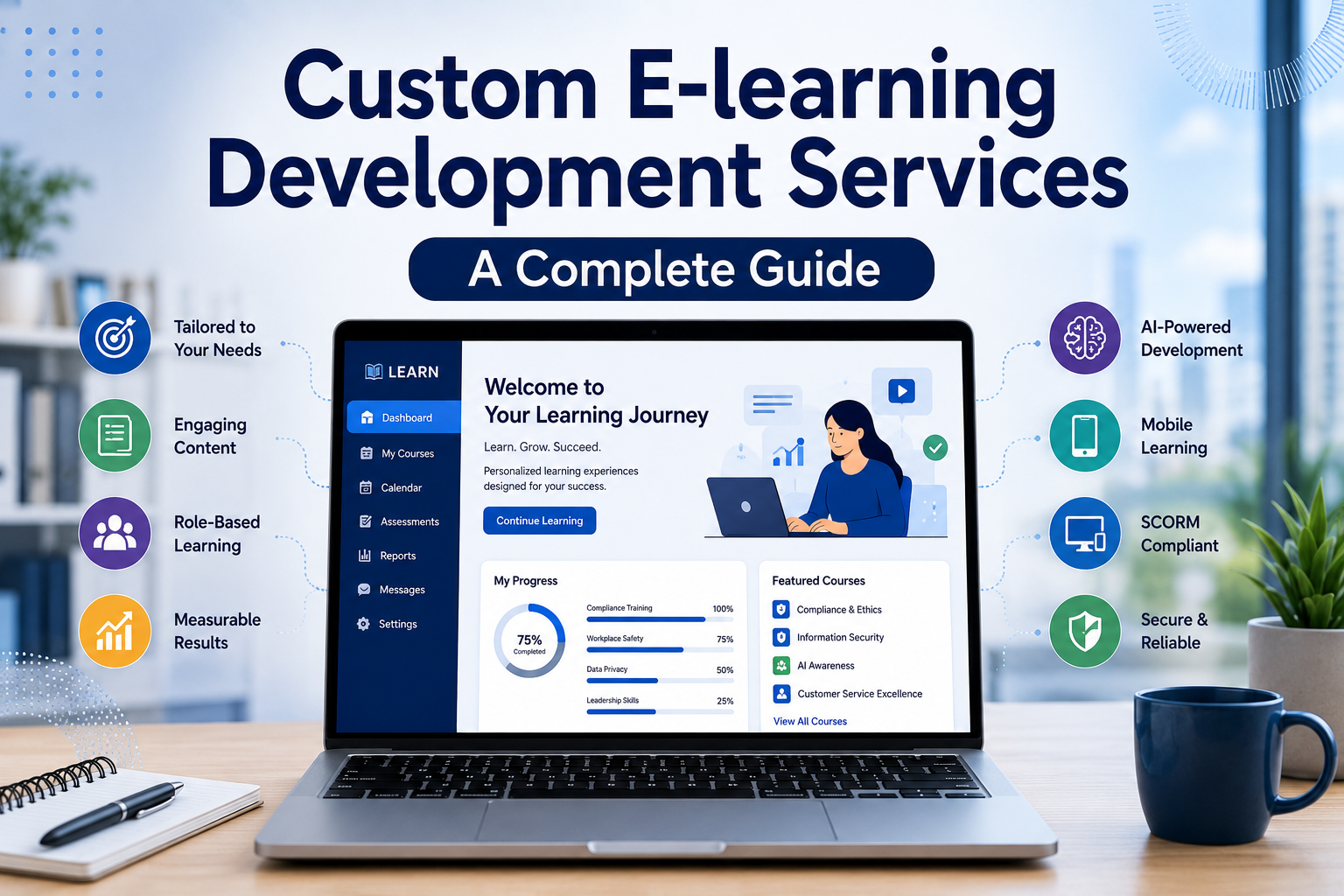
Custom E-Learning Development Services for Corporates in 2026-A Complete Guide
Introduction The way organizations train their employees has changed significantly over the last few years. Corporate learning is no longer viewed as a routine HR activity or a compliance requirement. Today, organizations expect learning to improve productivity, accelerate onboarding, strengthen compliance, support digital transformation, and prepare employees for constant business change. At the same time, the workplace has become more complex. Artificial intelligence is reshaping business processes, regulations continue to evolve, hybrid work has become the norm for many organizations, and employees are expected to learn new skills much faster than before. Generic training often struggles to keep pace
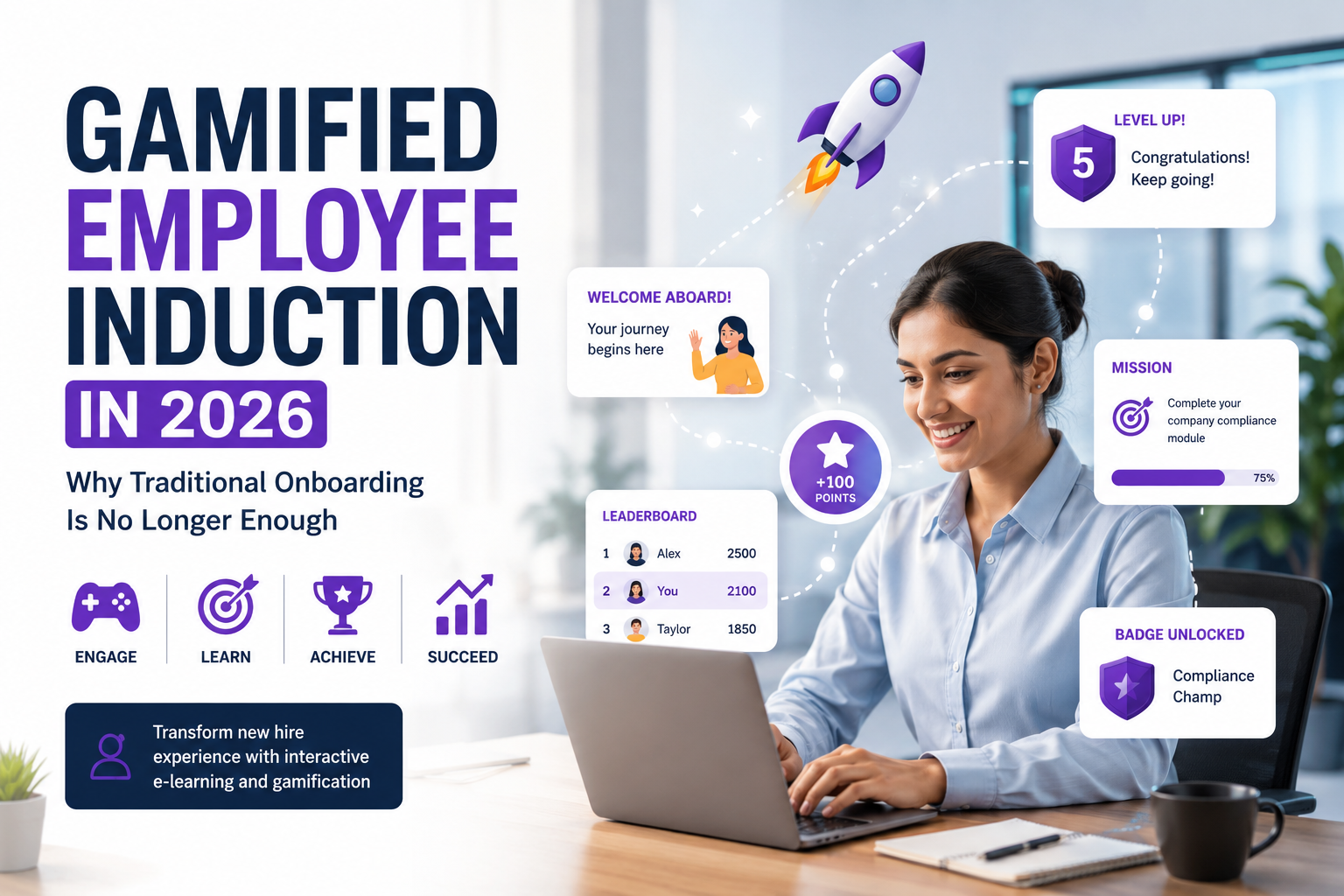
Gamified Employee Induction in 2026: Why Traditional Onboarding Is Not Enough
The first day at work is something every employee remembers. For some, it is exciting. For others, it is overwhelming. New faces, unfamiliar systems, company policies, compliance requirements, product information, organizational values, and endless presentations are all packed into the first few days. By the end of the induction programme, employees are expected to remember everything, even though much of the information is forgotten within days. Organizations have accepted this approach for years because it was considered the norm. In 2026, that thinking is changing. Businesses are investing heavily in recruitment, employer branding, and employee experience. Yet many still
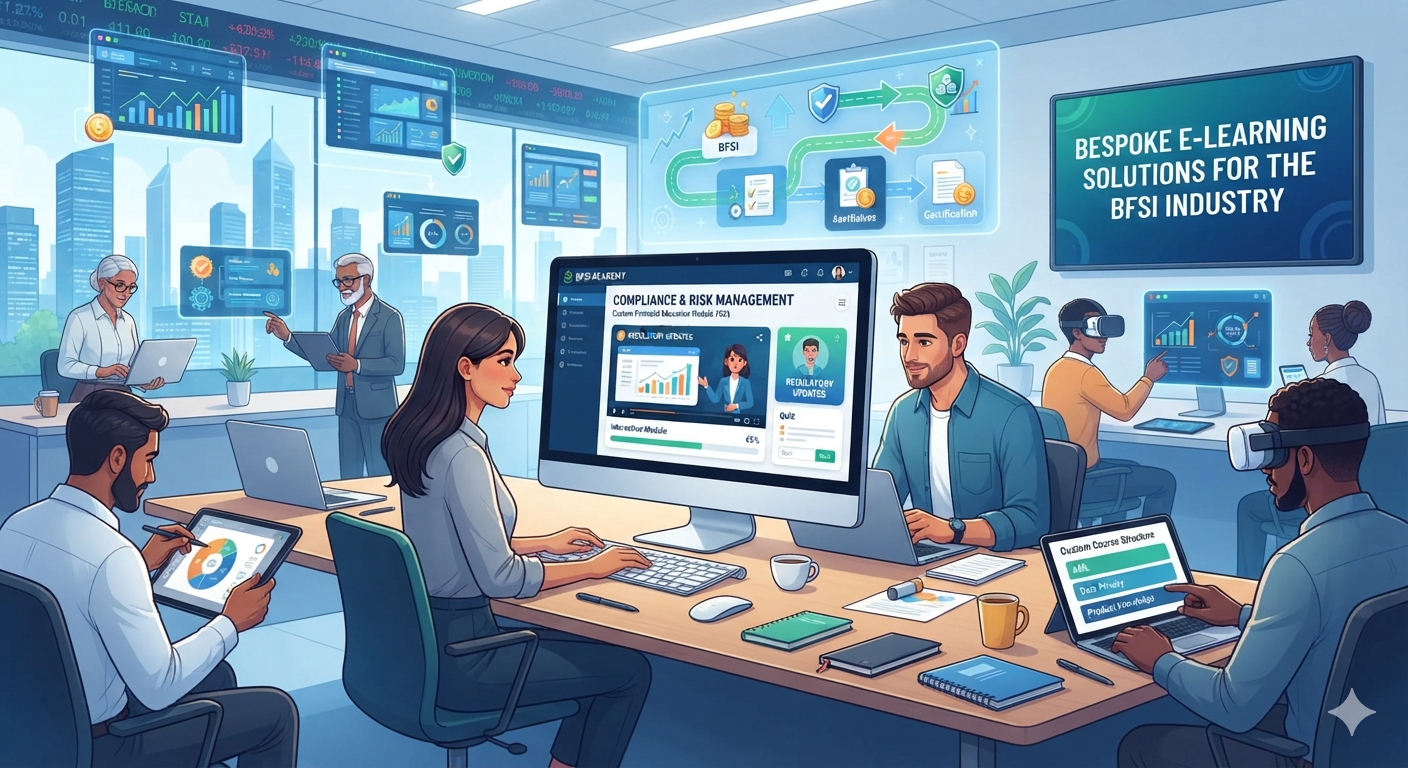
Custom E-Learning Development for BFSI: What Has Changed in 2026
The BFSI sector continues to be one of the most regulated sectors in the world. But in 2026, the pace of change has accelerated like never before. Banks, insurance companies, NBFCs, fintech firms, mutual fund houses, and payment companies are adapting to new technologies, stricter regulations, evolving customer expectations, and increasingly sophisticated financial crimes. These changes have also transformed the way organizations approach employee learning. A few years ago, many institutions could rely on standard e-learning courses to satisfy compliance requirements. Today, that approach is proving inadequate. Employees need training that reflects their actual roles, internal systems, products, customers, and