

How Scenario-Based E-Learning Improves Knowledge Retention and Workplace Decision-Making
In today's fast-paced business environment, organizations invest significant resources in employee training. Yet, many companies face a common challenge: employees forget much of what they learn shortly after completing training programs. Traditional e-learning courses often rely heavily on presentations, lengthy content screens, and passive information delivery. While these methods may transfer information, they do not always ensure that learners can apply their knowledge effectively in real workplace situations. This is where scenario-based e-learning makes a difference. Scenario-based e-learning places learners in realistic workplace situations where they must make decisions, solve problems, and experience the consequences of their actions in a

15 Gamification Ideas to Make Employee Onboarding More Engaging
Introduction Employee onboarding plays a critical role in shaping a new hire's perception of an organization. It is the first opportunity to introduce company culture, processes, expectations, and values. However, traditional onboarding often involves lengthy presentations, policy documents, and information overload that can leave new employees disengaged and overwhelmed. This is where gamification can make a significant difference. Gamification involves applying game elements such as points, badges, challenges, rewards, leaderboards, and storytelling to non-game activities. When incorporated into onboarding programs, gamification transforms passive learning into an interactive and enjoyable experience. Research consistently shows that engaged employees are more productive, learn

Common Mistakes to Avoid When Designing a Gamified Onboarding Program
Employee onboarding is one of the most critical phases in the employee lifecycle. A well-designed onboarding program helps new hires understand their roles, connect with the company culture, and become productive faster. To make onboarding more engaging and memorable, many organizations are turning to gamification. Gamified onboarding uses game elements such as points, badges, challenges, leaderboards, rewards, and storytelling to motivate learners and improve participation. When implemented correctly, it can transform a traditionally passive process into an interactive and enjoyable experience. However, not all gamified onboarding programs succeed. Many organizations become so focused on adding game mechanics that they lose

Traditional vs. Gamified Employee Onboarding: Which Is More Effective?
Employee onboarding is one of the most critical stages in the employee lifecycle. A well-designed onboarding program helps new hires understand their roles, connect with the company culture, and become productive faster. Yet many organizations still rely on traditional onboarding methods that often struggle to engage today's workforce. In recent years, gamified employee onboarding has emerged as a modern alternative, transforming routine orientation activities into interactive and rewarding learning experiences. But does gamification truly outperform traditional onboarding? This article compares traditional and gamified employee onboarding across key parameters to help organizations determine which approach is more effective. What Is Traditional

13 Types of E-Learning Gamification Used by Leading Organizations
Most employees don't dislike learning. They dislike boring learning. When training consists of endless slides, lengthy policies, and predictable quizzes, engagement drops rapidly. Employees click through the content, complete the mandatory assessment, and forget much of what they learned within days. This is why organizations across industries are increasingly turning to gamification. Gamification transforms passive learning into an engaging experience by incorporating elements such as challenges, rewards, storytelling, competition, exploration, and achievement. When designed well, gamification can significantly improve learner participation, course completion rates, knowledge retention, and real-world application. However, gamification is much more than points and badges. Let's explore
Pros and Cons of Gamified Employee Onboarding
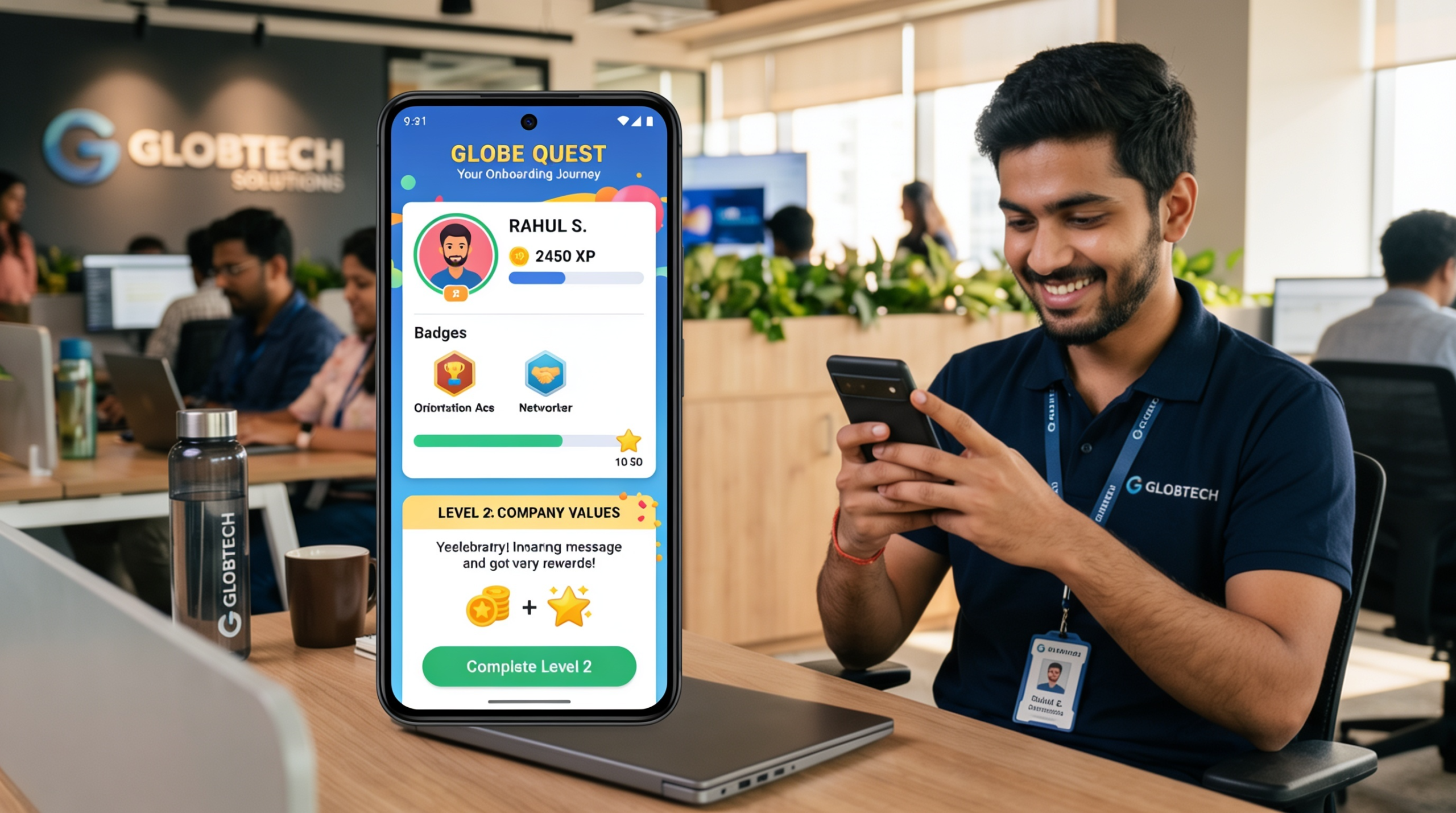
Introduction First impressions matter. For new employees, the onboarding experience often shapes their perception of the organization, influences their engagement levels, and impacts how quickly they become productive contributors. Yet traditional onboarding programs are frequently viewed as lengthy, information-heavy, and uninspiring. New hires are expected to absorb company policies, organizational structures, compliance requirements, job responsibilities, and workplace culture within a short period. The result is often information overload and poor retention. To address this challenge, many organizations are turning to gamified employee onboarding. By incorporating game elements such as points, badges, levels, challenges, leaderboards, rewards, and interactive scenarios, companies