The first day at work is something every employee remembers.
For some, it is exciting. For others, it is overwhelming. New faces, unfamiliar systems, company policies, compliance requirements, product information, organizational values, and endless presentations are all packed into the first few days. By the end of the induction programme, employees are expected to remember everything, even though much of the information is forgotten within days.
Organizations have accepted this approach for years because it was considered the norm.
In 2026, that thinking is changing.
Businesses are investing heavily in recruitment, employer branding, and employee experience. Yet many still welcome new hires with long presentations, static e-learning modules, and policy documents that struggle to hold attention. The result is predictable. Employees complete the induction because they have to, not because it prepares them for success.
This is where gamified employee induction is transforming workplace learning.
Organizations are no longer trying to make induction entertaining. They are making it meaningful. By combining game mechanics with realistic workplace scenarios, interactive challenges, and continuous feedback, companies are creating induction experiences that build confidence, improve knowledge retention, and help employees become productive much faster.
In 2026, gamification is no longer an interesting idea to implement. It is becoming an important part of how organizations introduce employees to their culture, values, and way of working.
The Workplace Has Changed and Induction Must Change With It
Today’s workplace looks very different from what it did just a few years ago.
Employees work from offices, homes, client locations, and project sites. Teams collaborate across cities and countries. Artificial Intelligence has become part of everyday work, digital platforms continue to evolve, and organizations frequently introduce new products, technologies, and business processes.
At the same time, employee expectations have changed.
A new hire who spends their personal life using interactive apps, streaming platforms, and mobile learning naturally expects a modern workplace to provide an engaging learning experience. Sitting through six hours of presentations on the first day no longer creates a positive first impression.
The first few weeks shape how employees feel about an organization. They influence engagement, productivity, confidence, and even long term retention.
Forward thinking organizations now see employee induction as more than an administrative activity. They see it as the beginning of the employee experience.
Why Traditional Induction Is Losing Its Impact
Traditional induction program is designed to transfer information quickly.
Employees receive presentations about company history, organizational structure, policies, compliance requirements, information security, workplace safety, and employee benefits. Every department wants to share important information, resulting in an induction schedule that often feels more exhausting than inspiring.
The challenge is not the quality of the information. The challenge is how it is delivered.
Imagine a newly hired sales executive joining a consumer goods company. On the first day, they attend presentations on company values, HR policies, travel guidelines, product portfolios, cybersecurity, workplace ethics, and compliance. Two days later, they visit a customer for the first time.
Will they remember every policy they heard?
Probably not.
Will they remember how to respond when a customer raises an unexpected question?
Only if they have practiced it.
Knowledge becomes useful only when employees understand how to apply it in real situations.
This is where gamified employee induction creates a significant difference.
Gamification Is About Better Learning, Not Playing Games
One of the biggest misconceptions about gamification is that it turns workplace learning into a game.
It does not.
Gamification applies the psychology behind games to create better learning experiences.
People enjoy making progress. They appreciate immediate feedback. They feel motivated when achievements are recognized. They remain engaged when they solve problems instead of simply reading about them.
Gamified employee induction uses these principles to encourage participation without compromising learning objectives.
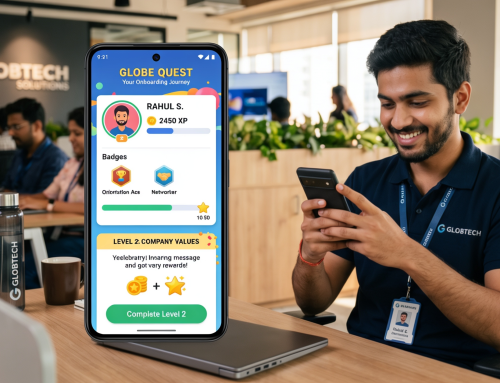
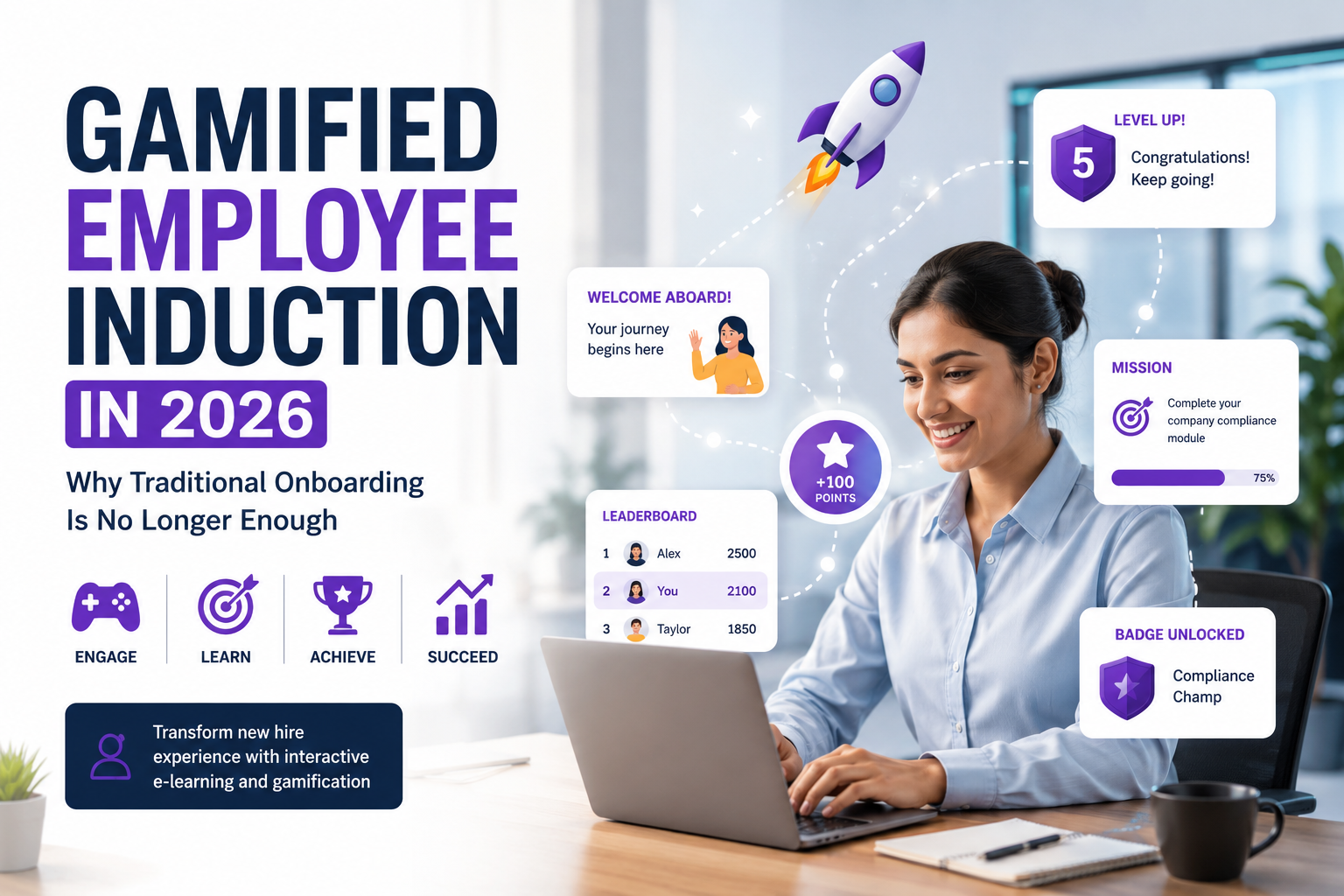
Instead of clicking through slide after slide, employees complete missions, solve workplace challenges, answer scenario based questions, unlock learning levels, and receive instant feedback on their decisions.
The focus remains on learning. The game elements simply make the experience more engaging and memorable.
Imagine an Employee’s First Week as a Learning Journey
Now imagine a different induction experience.
A new employee joins a financial services company. Instead of opening a presentation deck, they begin a digital journey.
Their first challenge introduces the organization’s culture and values through interactive stories.
The next mission asks them to identify suspicious customer behaviour during account opening.
Another challenge presents a cybersecurity scenario where they must decide whether an email requesting confidential customer information is genuine.
Later, they explore different departments, meet virtual colleagues, and unlock new learning modules as they progress.
Each activity reflects situations they are likely to encounter in their role.
By the end of the induction programme, the employee has not only completed mandatory learning but has also practiced applying knowledge in realistic workplace situations. This experience is far more likely to build confidence than listening to presentations alone.
Every Industry Can Create Its Own Gamified Induction Experience
One of the greatest strengths of gamified employee induction is its flexibility.
Every industry can design experiences that reflect its own business environment.
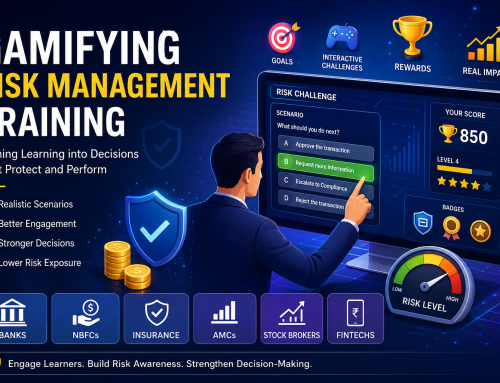
A bank may create customer onboarding challenges where employees identify fraud indicators, understand Know Your Customer requirements, and practice handling customer interactions as a part of their gamified employee induction module.
An insurance company can develop interactive claims investigations that help new employees recognize missing documentation, identify potential fraud, and understand internal approval processes.
Manufacturing organizations can simulate plant walkthroughs where employees identify safety hazards, follow emergency procedures, and complete equipment familiarization before entering the production floor.
Retail organizations can recreate customer interactions that teach employees how to handle complaints, manage difficult situations, and deliver consistent customer experiences.
Gamified employee induction for healthcare organizations can introduce patient privacy scenarios, infection control practices, and emergency response procedures through immersive learning activities that build confidence before employees begin interacting with patients.
The technology may be similar, but the learning experience should always reflect the organization’s own culture, processes, and business goals.
Why Gamification Works
Gamified induction succeeds because it aligns with how people naturally learn.
Employees remember experiences better than presentations. They learn more effectively when they actively participate instead of passively observing. Immediate feedback helps them correct mistakes while the information is still fresh.
Small achievements encourage continued participation and progress creates momentum.
Most importantly, realistic scenarios help employees transfer learning directly to the workplace. When employees encounter a similar situation during their actual job, they are more likely to remember what they practiced during induction.
That is where real learning begins.
The Future of Employee Induction
As organizations continue embracing Artificial Intelligence, digital workplaces, hybrid teams, and continuous learning, employee induction will continue to evolve.
Artificial Intelligence will personalize learning journeys based on an employee’s role and previous experience. Virtual Reality will allow employees to explore manufacturing plants, offices, or customer environments before they physically enter them. Interactive simulations will replace many traditional presentations, while learning analytics will help organizations identify knowledge gaps early and provide targeted reinforcement.
Despite these technological advances, the objective of employee induction will remain the same. Help every new employee feel confident, connected, and prepared to contribute. Technology simply provides better ways of achieving that objective.
Conclusion
Every organization invests considerable effort in attracting talented people.
The employee induction experience determines whether that investment translates into engaged, productive employees or individuals who spend weeks trying to understand how the organization actually works.
Gamified employee onboarding moves beyond information sharing. It creates experiences that encourage participation, build confidence, reinforce organizational culture, and prepare employees for real workplace situations.
In 2026, organizations are interested in knowing how quickly new employees can become confident contributors.
That answer increasingly lies in gamified induction modules that are interactive, practical, and designed around the way people learn best.
Because every employee remembers their first week.
The organizations that make those first few days meaningful are often the ones employees choose to stay with, grow with, and succeed with.